
Cardigan Closures: Choosing Between Buttons, Zips and Open Fronts
 Views: 0
Quick answer
The placket decides how a cardigan is used every day, what it costs and what it says stylistically: buttons are the classic choice with the widest material range, zips are the fastest to open and the most sporty, and open fronts are the cheapest but depend entirely on drape. Choose by how your customer will actually wear the garment, not by the designer's personal preference.
A cardigan is worn open, closed, shrugged off and draped over chairs — and the closure is what survives all of that. Buttons, zips and open fronts are not interchangeable style details. They decide how the garment is used every day, how much it costs to make, and how it reads on a rail. The right choice follows your customer's wearing scenario, not the designer's mood board.
Which closure types can a cardigan use?
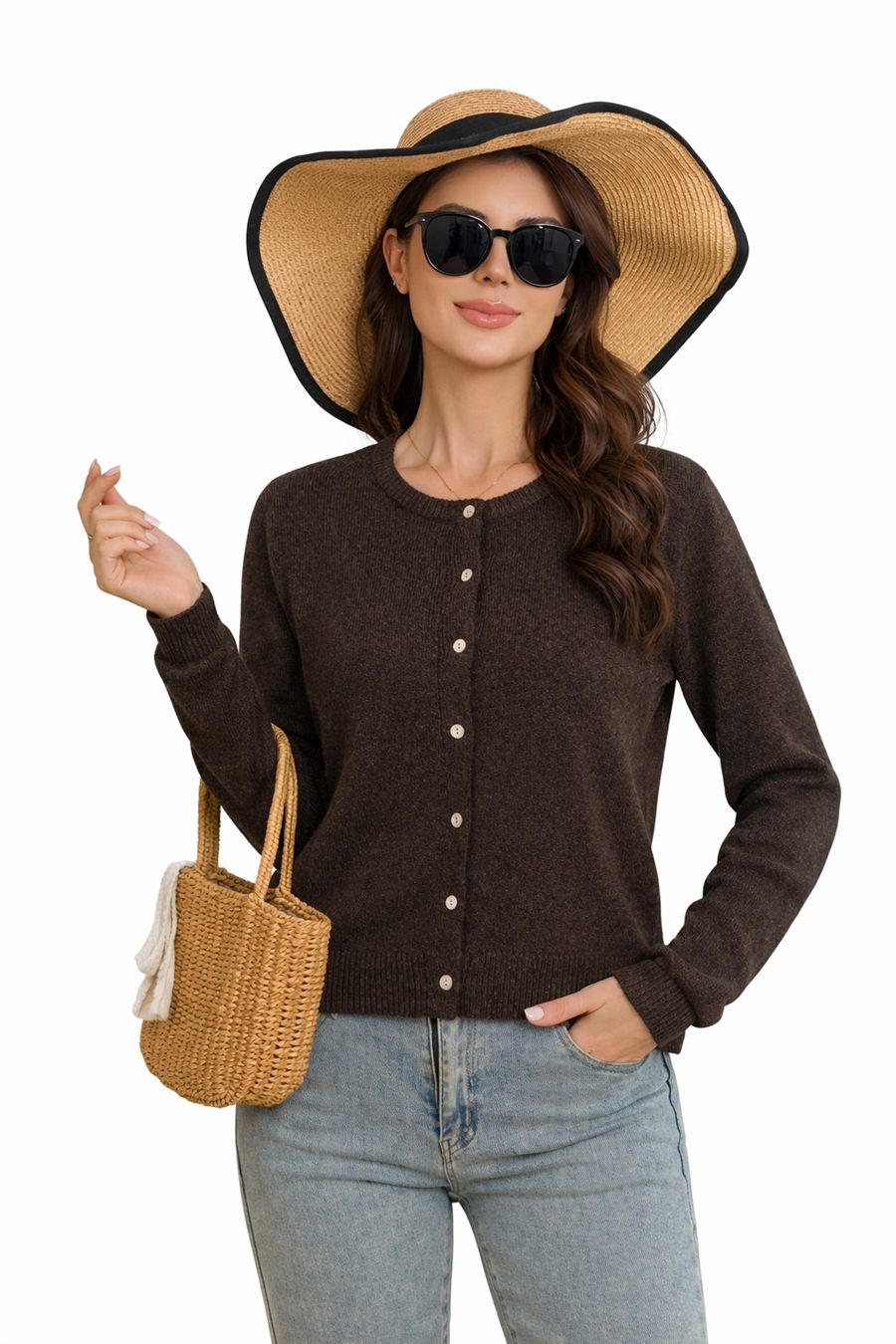
- Full button placket. The classic: a full-length front band with one row of buttons. The placket — the reinforced front band where the closure sits — must lie flat and button spacing must be even; both are visible quality markers. Works from menswear staples to fine womenswear.
- Half placket. Opens only to the chest, then pulls on over the head. A hybrid between sweater and cardigan, common in polos and sportier knits; fewer buttons, lower cost, quicker dressing.
- Zip front. Fastest to open and close, with a sportier, more technical character. A two-way zip, which opens from both ends, suits longer cardigans and styles worn while seated or driving.
- Open front. No closure at all — the fronts simply hang. Lowest cost and simplest construction, but the style leans entirely on drape; in a thin, fluid yarn it can look sparse, so open fronts want a yarn with body.
- Wrap or belt. Ties closed: elegant and adjustable, but it demands excellent drape and adds a component to produce, wash and keep track of.
- Double-breasted. Two overlapping front panels with paired button columns — visually heavy, warmer across the chest, uses more yarn and buttons, and reads strongly vintage.
Which button materials work on knitwear?
Once buttons are chosen, the material sets both tone and price. Six families cover most of the market:
- Corozo. Corozo (tagua, or "vegetable ivory") is the hard seed of a South American palm. It dyes well, shows natural grain, survives washing and machine-sewing, and sits mid-price — the workhorse natural button for premium-casual knitwear.
- Horn. Genuine horn buttons have a depth and subtle sheen no plastic reproduces, and each button differs slightly. The trade-offs are cost and care: horn dislikes long, hot washes.
- Shell (mother-of-pearl). Mother-of-pearl — the iridescent inner layer of certain shells — gives the classic shirt-button lustre. On knitwear it can look slight: small, light buttons suit fine-gauge cardigans better than chunky ones.
- Metal. A strong stylistic signature with real weight in the hand. Watch laundering: metal can dull, mark fine yarns, or cool the hand feel of the front panel.
- Polymer / resin. The cheapest and most colour-flexible option — any Pantone, any shape — with the most ordinary surface. Right where budget leads and the button is not the story.
- Toggle. A bar-shaped button on a loop, rooted in duffle-coat tradition. Strongly casual and oversized-friendly; a fast way to make a cardigan read outdoorsy.
How do closures move cost and lead time?
Button cost is quantity multiplied by unit price: a full placket commonly carries eight or more buttons, and double-breasted styles carry more, so a small per-button difference compounds across an order. Three variables deserve attention. Special buttons — logo-engraved, custom-dyed or fabric-covered — usually need their own ordering lead time and minimum quantities. Hand-sewn buttons cost more per garment than machine-sewn and are typically reserved for premium lines. And spare buttons are a small but real line item. Ask for the closure as its own line in the quotation so it never hides inside "trim".
What does a zip demand from the knit around it?
Zips are the closure most likely to fail on knitwear, because knitted fabric stretches and zip tape does not. The placket needs a stable, usually reinforced band so the zip does not wave; the join between zip and knit must survive repeated pulling; and the slider should run smoothly over any crossed seams. Specify zipper length against the actual garment, not the sketch, and test the sample by zipping and unzipping it twenty times — the cheapest test that catches most problems.
How should closures match yarn and gauge?
Scale is the rule. Coarse gauges and chunky yarns carry large buttons; fine-gauge knits want small, light ones. A heavy horn or metal button on a thin knit slowly pulls the front out of shape — the closure deforming the very fabric it decorates. (Gauge, the number of needles per inch on the knitting machine, is explained in our knit gauge guide.) Match closure weight to fabric weight and the garment keeps its line for years.
A note on childrenswear
For kids' cardigans, buttons are small parts, and small parts carry safety obligations that differ by market. That is a compliance topic rather than a styling one, so we keep this brief: flag children's styles early so closures are chosen within the framework set out in our children's knitwear safety compliance guide.
Buttons as a branding tool
The closure is one of the cheapest places to make a garment unmistakably yours. Contrast-colour buttons turn a navy cardigan into a signature piece; fabric-covered buttons extend the body yarn across the closure for a seamless look; logo-engraved buttons put the brand under the wearer's fingertips. None of these changes the silhouette, yet all of them change how the garment photographs and how it is remembered. For where each placket style sits in the wider family, see our cardigan styles buying guide.
YZR Sweaters, an OEM/ODM knitwear manufacturer in Dongguan, develops placket and closure options alongside the sample: button material, zip specification, reinforcement and stitch method, matched to your yarn, gauge and price point — with sampling that lets you compare two closure versions before you commit.
Deciding between buttons and zips for your next cardigan program? Send us your reference styles — we'll come back with closure options, costs and a sampling plan.
Get a free quote Visit yzrsweaters.comFrequently asked questions
Which buttons survive frequent washing best?
Corozo and quality resin buttons handle repeated laundering best. Horn and mother-of-pearl prefer gentler cycles and can lose finish over time, while metal buttons may dull or mark fine yarns in a machine wash. If the care label will say "machine wash", choose the closure with that in mind.
Are metal zips or resin zips better for knit cardigans?
Resin zips are lighter, quieter and cannot rust, which suits frequently washed knitwear. Metal zips bring more weight and a premium, workwear-leaning character. Either way the deciding factor is the placket: a reinforced, stable front band matters more than the zip brand itself.
Should a cardigan include spare buttons?
It is common practice to attach one or two spares — sewn to an inside seam or placed in the polybag. The cost is minimal, and it removes one of the easiest ways a customer ends up blaming the garment for a lost button.
Comments
Comments are loading. To enable live comments, see setup notes in the repo.