
Cardigans: Styling and Merchandising Tips for Retailers
 Views: 0
Few knitwear items are as easy to sell as the cardigan. It opens at the front, so it fits more bodies; it layers over everything already in a customer's wardrobe; and it works in every season with a simple change of weight. That combination makes it one of the most dependable categories in a retail range — provided it is styled and merchandised with a little intent.
Why the cardigan is an easy sell
The open front is the whole story. A pullover has to fit over the head, sit right across the chest and suit the wearer's neckline; a cardigan can be worn closed, open, belted, half-tucked or draped over the shoulders. It stretches its own size range, which generally means fewer fit returns and a wider customer base than a fitted knit top.
It is also a genuine cross-season item. In spring a light viscose or cotton cardigan is outerwear; in autumn the same silhouette in wool blend becomes a layering piece under a coat. Retailers who plan cardigans as a twelve-month category rather than a winter-only one tend to see steadier sell-through.
Styles and how to present them
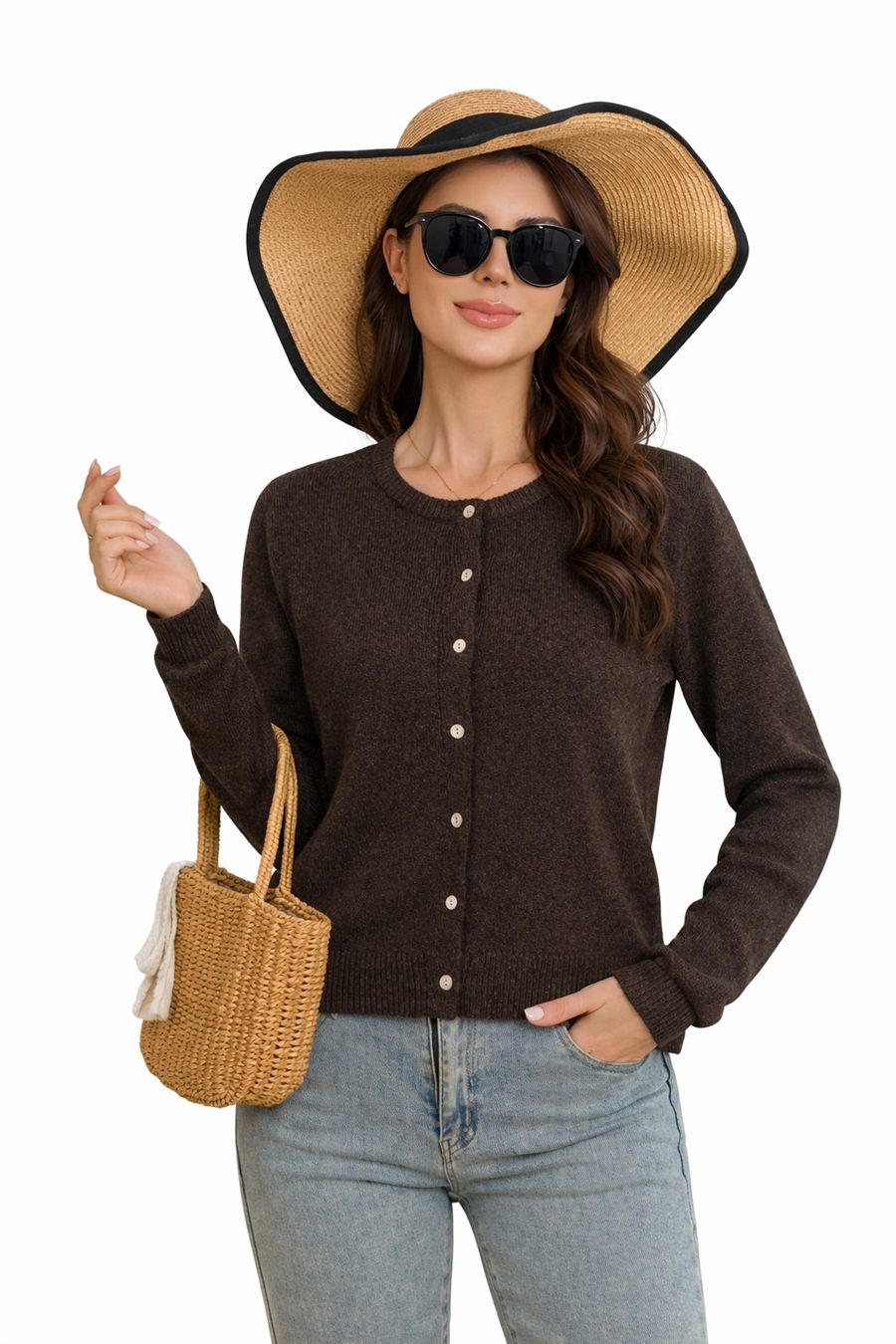
- Crew-neck button-front cardigan — the core style. Fold it flat with the buttons closed and style one open over a tee or slip dress; showing both states answers the customer's main question before they ask it.
- Longline cardigan — reads as a light coat. Style it over a full-length dress or wide-leg trousers and photograph it full-length, never cropped at the knee.
- Cropped cardigan — pairs naturally with high-waist denim and co-ord sets. Merchandise it near the bottoms it was designed for, not in the knitwear aisle.
- Wrap and shawl-collar cardigan — the most premium-looking silhouette. Show it belted to make the waist shape obvious, and give it a slightly separated position in-store or a hero slot online.
- Buttonless and open-front styles — easy add-on purchases near the till or in a "finish the look" module.
Styling that lifts average order value
The cardigan is a natural attachment item, because it only looks complete when something sits underneath it. That gives you a legitimate reason to merchandise it alongside a partner piece:
- Ribbed knit top underneath — a mock neck or turtleneck in a contrasting neutral makes the outfit look considered and adds a low-price-point item to the basket.
- Over a midi dress — the fastest way to move a dress from summer to autumn without discounting it.
- With straight-leg or wide denim — the most shop-able pairing for casual customers and the easiest look to repeat across a whole collection.
- Layered with a shirt — gives a menswear-adjacent, structured feel that suits workwear and unisex lines.
Show the complete look with a visible price for each piece. Bundled styling typically sells more units than a single hero garment photographed alone, and it makes markdown decisions easier later because you can see which piece in the outfit is actually driving the sale.
Photography and product page notes
- Shoot both states. Closed on a model and open over a styled outfit — customers want to see how it hangs.
- Show the button placket close up. Button quality, placket neatness and buttonhole finishing are the details that justify a higher price.
- Add a flat-lay shot for customers checking length and proportions.
- State the fabric and stretch plainly. A short line on composition and care reduces returns on wool blends.
- Mention pocket and cuff details in text — frequently missed in images but often searched for.
Colour planning
Cardigan ranges usually work best built around a neutral core with a small fashion statement. Black, cream, oatmeal, camel and grey tend to carry the volume and reorder reliably; one or two seasonal shades — a deep burgundy, a soft sage, a pastel for spring — give the range a current feel and give returning customers a reason to buy again.
If you sell online, double-check how similar neutrals read on screen. Oatmeal, greige and warm grey can look almost identical in a listing photograph, which pushes customers toward whichever is cheapest. Name and describe them distinctly, or drop one.
Size ratios and stock depth
- Go deeper, narrower. Two or three colourways in real depth usually outsell six colours bought thinly.
- Weight the middle sizes. Cardigan size curves generally peak at M and L; small and extra-large can be bought shallower unless your customer data says otherwise.
- Keep a size run for the hero. Breaking sizes on a core cardigan costs more in lost sales than the inventory risk it avoids.
- Plan a repeat window. Cardigans reorder well; leaving production capacity for a second run is often worth more than a slightly lower first-order price.
Working with the right supplier
Styling and merchandising only pay off if the garment holds up in the fitting room and after five washes. As a Dongguan knitwear manufacturer, we produce cardigans through our OEM/ODM service with custom yarns, colourways, buttons, trims and private label packaging, and flexible MOQ so you can test a new colour before committing to depth. Our partner factories are certified (BSCI / SEDEX / Oeko-Tex) and welcome audits and third-party inspection such as SGS or BV.
Building a cardigan range for next season? Send your style reference, colours and target quantity — we'll reply with a quote and sampling plan within one business day.
Get a free quote Visit yzrsweaters.com
Comments
Comments are loading. To enable live comments, see setup notes in the repo.