
Metamerism in Knitwear: Why Colours Match Under One Light and Not Another
Quick answer
Metamerism is when two colours match under one light source and stop matching under another. It happens because the two materials reflect light differently across the spectrum even though they look identical to the eye in one viewing condition. Knitwear is exposed to it because one garment often combines differently dyed components — body, rib, buttons, zips, embroidery thread. The control is simple but has to be written down: approve colour under two or more named light sources, and check the assembled garment rather than the swatch alone.
We see this a lot. A buyer approves a lab dip under the factory's light box, signs off, and the bulk arrives looking right — until someone holds the garment up next to its own rib trim near a shop window, and the two no longer agree. Nothing changed in the dyeing. The colour never was a single match; it was a match under one set of conditions.
What metamerism actually is
Colour is not a property of an object alone. It is what is left of the light that hits the surface, minus what the surface absorbs. A red dye absorbs most wavelengths and reflects the red ones, but the exact shape of that reflection curve differs between two red dyes that look identical.
Under one light source — say, filtered daylight — those two different curves can deliver the same signal to the eye, so they match. Change the light source to something with a different spectral make-up, such as the fluorescent tubes used in a fitting room, and the two curves no longer deliver the same signal. Now they read as two different colours. That pair is called a metameric pair, and the effect is metamerism.
This is why colour cannot be fully described by a single set of numbers. Instrument readings help enormously, but two readings agreeing does not guarantee the match holds under every light. Our notes on lab dip approval cover where this sits in the approval sequence.
Why knitwear is especially exposed
A woven garment is usually one fabric dyed in one process. A knitted garment is often several.
- Mixed fibre components. Wool, cotton, nylon and acrylic take up dyestuffs differently, so a wool body and a nylon-reinforced rib cannot be dyed to the same shade with the same recipe. Two different recipes are used — and two different recipes are the most common source of a metameric pair inside one garment.
- Trims and hardware. A zip tape, a button, a woven label or an embroidery thread all arrive already coloured, from a different dye house, on a different substrate. Matching them to the body is a matching problem between materials, not within one.
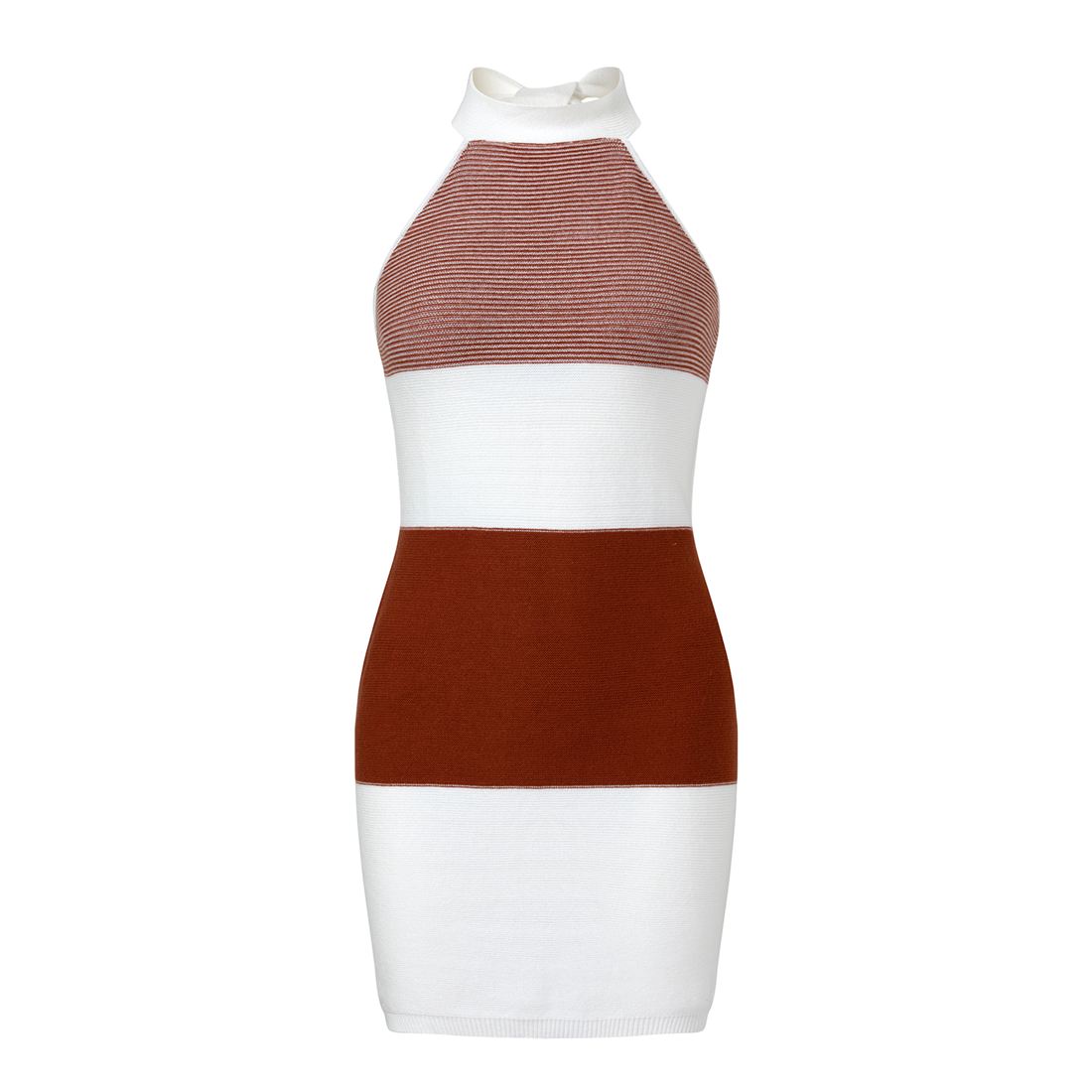
- Panel and stripe work. A striped knit combining yarn-dyed and piece-dyed components puts two entirely different dyeing routes side by side in one panel.
- Finishing. Washing, softening and brushing change the surface, and the surface is where reflection happens. A swatch approved before finishing can read differently from the finished garment, which is why the approval should be made on material that has been through the finish it will actually receive.
Where it shows up in real orders
The pattern we see most often is body-versus-trim. The approved lab dip matches the reference perfectly under the light box. Buttons, zip tape or contrast rib are approved separately, often weeks later and sometimes from a different supplier, approved against the same reference rather than against each other. Assembled, everything matches under the factory light — and separates under shop lighting.
The second common case is a reorder. A repeat run is dyed to the same specification but the mill adjusts the recipe slightly to hit the target with a different dyestuff batch, and the new dye has a slightly different reflectance curve. Against the first delivery the difference is invisible under one light and clear under another. Our notes on first orders and reorders cover why reorders need their own approval discipline.
The third is simply the wrong viewing condition — a light box with an aging tube, or an approval done on a desk lamp at nine at night.
How to specify the approval conditions
The difference between a programme with colour problems and one without is usually whether the viewing conditions were written into the spec rather than left to habit.
- Name a primary light source. State which source the approval is judged under — typically artificial daylight for brands selling primarily online and daylight plus a store source for anything going into shops.
- Name a second and third source. The whole point is to catch a mismatch. A colour that holds up under daylight and under the fluorescent source most retail chains use is unlikely to cause trouble later.
- Approve the assembly, not only the components. Lay the body fabric against every trim that will sit next to it and view them together under each source. This is what our notes on trim card approval are designed to do.
- Approve after finishing. A swatch taken off the machine is not the garment. Ask for the approval sample to be washed or finished the way bulk will be.
- Keep the physical reference. A digital colour standard drifts with displays and with the age of the reference itself. Our notes on colour cards cover keeping a controlled physical set.
- Say what happens if the second source disagrees. Deciding that in advance, when nobody is under time pressure, is far cheaper than discovering it during inspection.
How it is tested and controlled
A spectrophotometer reads the reflectance curve directly rather than relying on the eye, and a colour difference can be expressed numerically against the standard. That catches the ordinary cases well. The limitation is that a good numerical agreement can still hide a metameric pair, because the instrument is comparing numbers rather than asking what happens under a second illuminant.
The practical answer is to combine both: use instrumental readings to keep colour consistency tight bulk-to-bulk, and use multi-source viewing to catch metamerism specifically. Some programmes specify a limit on how far the match may drift between two named illuminants; that is worth discussing with the mill rather than assuming it is included.
It sits alongside colour fastness rather than replacing it — fastness testing asks whether colour survives washing and rubbing, while metamerism asks whether it survives a change of lighting. Both belong on a colour specification, and both are covered in our notes on lab testing.
What to do when it appears
First, confirm it is metamerism and not a genuine off-shade. View the suspect garment against the approved reference under the primary source. If it matches there and separates under the second source, it is metamerism; if it is different everywhere, it is an ordinary shade deviation and is dealt with as one.
Second, establish the commercial significance. A body and rib that separate only under an unusual illuminant may be acceptable for online retail shot under controlled lighting and unacceptable for a shop floor with mixed lighting. That judgement belongs to the buyer, but it should be made on evidence rather than by accident.
Third, decide whether the fix is a re-dye, a trim substitution or an acceptance with lighting guidance. A re-dye is straightforward where the supplier has the flexibility; changing the trim to a substrate that can share the body's recipe is often a cleaner long-term answer.
At YZR Sweaters we work with partner factories holding BSCI, SEDEX and Oeko-Tex certifications, welcome factory audits, and support third-party inspection through firms such as SGS and BV. On colour we prefer to be slightly tedious at approval: we ask which light sources matter to you, we lay the trims against the body before anything is approved, and we would rather tell you in development that a combination is metameric than let you find it on a shop floor.
Colour-critical programme and tired of approvals that come back different? Send us the reference, the fibre blend and the trims you plan to use, and we will tell you where the risk is before sampling starts.
Get a free quote Visit yzrsweaters.comOr reach us directly: daniel@yzrsweaters.com · WhatsApp +86 137 2449 4230 · Dongguan, China
Frequently asked questions
Is metamerism the same thing as a dye lot difference?
No, though they are easy to confuse. A dye lot difference means the shade is different under any lighting — it is a real deviation from standard. Metamerism means the shade agrees under the light it was approved under and disagrees under another, even though each component individually matches its own reference. The test is to view against the standard under two different sources: if the difference appears only in one, it is metamerism.
If the lab report says the numbers match, can the colour still fail?
Yes. Instrument readings compare two colours under one defined condition, and a good agreement does not guarantee the same agreement under a different illuminant. That is not a criticism of the measurement — it is simply what the measurement measures. Numbers catch conventional off-shade; multi-source viewing catches metamerism. Programmes that rely on only one of the two tend to get surprised by the other.
Is daylight the most revealing light source?
Natural daylight is the strictest in the sense that customers judge garments in it, but it is also variable, so it is unreliable as an approval condition on its own. The practical arrangement is to approve under a standard daylight-simulating source for consistency, plus at least one store-type source chosen to match where the garment will actually be sold. A colour that survives both is rarely a problem in the field.
Can the factory just fix it once it is found?
Sometimes. If the mismatch is between the body and a trim, changing the trim or its dye recipe is usually quick. If it is between two fibre types that cannot share a recipe, the answer is more discussion than dyeing, and it is usually cheaper to settle during development than after the bulk is knitted. This is why we raise the question at approval rather than waiting for inspection.