
Turtleneck and Mock-Neck Sweaters: A Sourcing Guide for Buyers
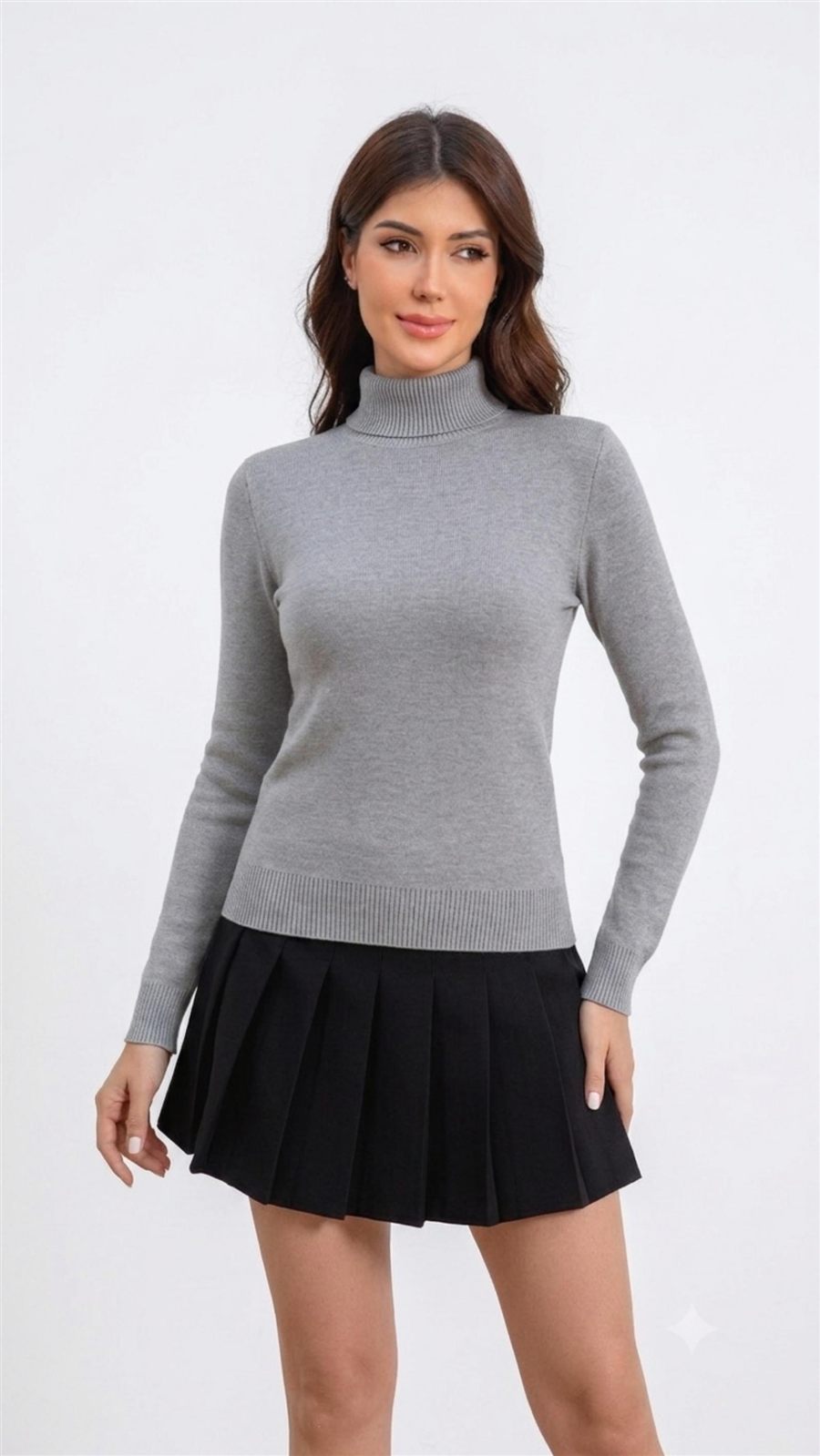
Quick answer
A turtleneck has the full folded collar and reads warmer and more traditional, while a mock neck uses a shorter stand-up collar that is easier for customers who dislike a tight neck and fits contemporary and minimal lines. Both sell every winter, suit a broad age range and carry higher perceived value than a plain crewneck for little extra cost. Fit is the product: the collar must clear the head comfortably and the sleeve must reach the wrist.
The turtleneck is one of the quiet best-sellers of every autumn/winter range. It sells every season, works across age groups, and carries a higher perceived value than a plain crewneck without costing much more to make. The mock neck sits just below it — a slightly easier, more contemporary version of the same idea. Together they are the backbone of a winter basics collection.
Why these styles keep selling
Turtlenecks and mock necks solve a practical problem: they add warmth at the neck, which is exactly where customers feel the cold first. That makes them easy to justify at a higher price than a standard sweater, especially in finer gauges that read as polished rather than bulky.
- Seasonally reliable — a staple that sells every winter without redesign.
- Broad customer fit — works for young and older customers alike.
- Layering value — worn alone or under a blazer, jacket or cardigan.
- Higher perceived value — reads as a considered piece, not a filler item.
Turtleneck versus mock neck
- Turtleneck (roll neck) — the full folded collar. Warmer, more traditional, strong in classic womenswear and menswear lines.
- Mock neck — a shorter, stand-up collar that does not fold over. More modern, slightly more comfortable for customers who dislike a tight collar, and very strong in contemporary and minimal lines.
- Frill-trim mock neck — the same silhouette with a soft frill at collar, cuff and hem. Adds a feminine, fashion-led detail while keeping the basic shape.
Many buyers carry both, using the mock neck for the volume and the turtleneck for a slightly more premium, classic position.
Fit is the whole product
Unlike a loose chunky sweater, a turtleneck has nowhere to hide — it is worn close to the body and often under other layers. Fit is therefore a quality issue, not just a design preference.
- Slim but not tight — should skim the body without straining across the chest or shoulders.
- Collar comfort — the collar must not choke; confirm it comfortably clears the head on and off.
- Body length — long enough to stay tucked, short enough to wear out.
- Sleeve length — should reach the wrist with a little ease, not stop short.
Always approve a fit sample on a real fit model before bulk. Small errors in a fitted knit show up far more than in a loose style.
Yarn and gauge choices
Fine-gauge rib knits dominate this category. A 12GG or 14GG rib in a viscose or wool-blend yarn gives the smooth, body-skimming look customers expect. Heavier gauges suit chunkier turtlenecks aimed at colder markets and a more casual customer.
Fibre choice drives both feel and cost: viscose and cotton blends land at accessible price points, while merino and cashmere blends support a premium position. Because these styles use relatively little yarn, buyers can often afford a better fibre than they expect.
Sizing and colour range
Fitted knits are more sizing-sensitive than loose ones, so confirm your size chart and grading carefully. Neutral colours — black, camel, gray, cream — are the volume sellers; a seasonal accent colour per drop keeps the range from feeling flat. A typical basics range carries the neutrals all year and rotates one or two trend shades.
Where they fit in a range
- As a core basic — the reliable volume style that funds the rest of the collection.
- As a layering piece — styled under dresses, blazers and outerwear in your lookbook.
- As an entry price point — a lower-cost knit that still feels considered.
- As a gift item — strong for holiday and winter gifting promotions.
Working with a knitwear supplier
Our OEM/ODM programs cover turtlenecks, mock necks and frill-trim knits in wool blends, viscose and cotton, with custom colours, gauges, labels and packaging. Partner factories are certified (BSCI / SEDEX / Oeko-Tex) and welcome audits, and we support full or third-party inspection before shipment.
Because these styles are simple to produce and efficient to ship, they also make a practical first order if you are testing a new supplier.
Building a winter basics range? Send us your styles, colours and target quantity — we'll reply with a quote and sampling plan.
Get a free quote Visit yzrsweaters.comFrequently asked questions
What is the difference between a turtleneck and a mock neck?
A turtleneck has the full folded collar, which reads warmer and more traditional. A mock neck uses a shorter stand-up collar that does not fold over, so it is more modern and slightly more comfortable for customers who dislike a tight collar. Many buyers carry both, using the mock neck for volume and the turtleneck for a more premium position.
Which gauge and yarn work best for these styles?
Fine-gauge rib knits dominate. A 12GG or 14GG rib in a viscose or wool-blend yarn gives the smooth, body-skimming look customers expect, while heavier gauges suit chunkier turtlenecks for colder markets. Viscose and cotton blends land at accessible price points, and merino or cashmere blends support a premium position. These styles use relatively little yarn, so a better fibre is often affordable.
What fit points should I check before approving bulk?
Four things. The body should skim without straining across the chest or shoulders, the collar must clear the head comfortably on and off, the body length must be long enough to stay tucked and short enough to wear out, and the sleeve should reach the wrist with a little ease. Approve a fit sample on a real fit model, because small errors show more in a fitted knit.