
What Actually Sells in Sweaters on Amazon
Quick answer
On Amazon two numbers decide whether a sweater makes money: conversion on the listing, and the return rate after delivery. Bestsellers win the first with honest, well-lit photography and specific fabric claims, then protect the second by getting sizing and pilling right. That means the sourcing brief should start with the return drivers — fit, shrinkage, pilling, colour — not with the silhouette.
We supply several brands that sell knitwear mainly on Amazon, and we also run our own women's knitwear brand, LINFAIR, on Amazon US — so we see the problem from both sides of the warehouse. The lessons are not what most first-time sellers expect. It is rarely the design that fails. It is expectations set by the listing, and expectations broken by the sweater after one wash.
The listing is the product
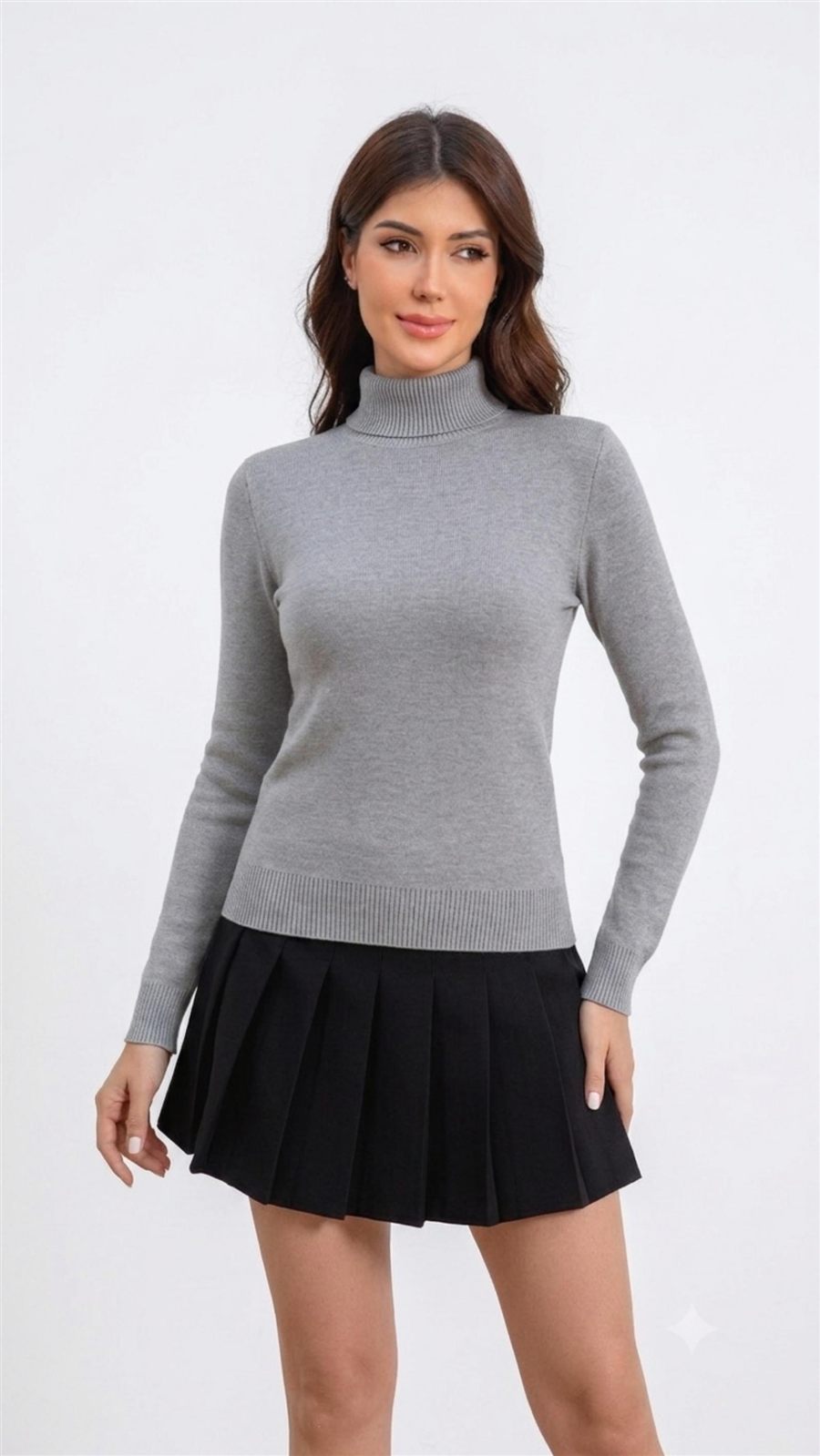
On a marketplace, the customer cannot touch the knit, so the listing does the job a shop assistant would. The sweaters that sell tend to share a few things: a main image on a clean background that reads at thumbnail size, lifestyle images that show drape and thickness, and copy that states the fabric and the fit plainly. Vague luxury language ("premium feel") converts poorly; "fleece-lined, mid-weight, relaxed fit, machine washable" converts well because it sets an expectation the product can actually meet.
What the fabric copy is really asking the factory for
Every strong claim in a sweater listing is a specification in disguise. When you write these into your brief, price and planning change accordingly:
- "Fleece-lined." A brushed interior is a finishing step and a different yarn plan — it adds warmth and cost, and it must be tested for shedding.
- "Cashmere blend" / "5% lamb cashmere." A small premium-fibre percentage is a marketing and a costing decision; the claim must match the fibre content tolerance the label allows, and it must survive lab verification.
- "Anti-pilling." This is a yarn and finishing choice with a test result attached — see pilling prevention. Do not claim it unless the factory has tested it.
- "Machine washable." That is a shrinkage and dimensional-stability promise. It is the claim most likely to be broken by a cheap knit.
Price bands and where the margin sits
Mass-market sweaters on Amazon cluster into recognisable price bands, and each band is really a different cost structure. A thin, lightweight knit can hit a low price with a modest yarn and short finishing time; a fleece-lined or blended knit costs more to make but supports a higher price and a better review profile. The trap is trying to compete at the lowest band while claiming premium features — the arithmetic does not work, and the reviews eventually say so. Decide the band first, then let it drive the yarn and the finishing, not the other way round.
Reviews are a QC feedback loop
This is where manufacturing discipline pays for itself. Read enough sweater reviews and three complaints dominate: it pilled, it shrank, and the size was wrong. Those are precisely the three things a factory controls and a buyer can specify:
- Pilling — a yarn and finishing issue, testable before bulk.
- Shrinkage — a dimensional stability issue, measured against the wash cycle you promise.
- Sizing — a grading and tolerance issue. A clear size chart and a consistent tolerance remove most of it.
Every return costs more than the margin on the sale, so a sweated-over pilling result is not a quality nicety — it is profit protection.
Colour depth and size runs: the MOQ problem
Amazon rewards range: many colours, many sizes, all in stock. But range multiplies your minimum order. A single style in five colours and six sizes is thirty SKUs, and if the factory's minimum applies per colour, the bill multiplies fast. The brands that make this work do two things: they launch a narrow, tested colour and size set and expand the winners, and they agree a low-MOQ structure per colour up front rather than discovering it at the quote stage.
Briefing a factory for an Amazon-first line
If the channel is Amazon, brief the factory in the language of the channel:
- Name the return drivers you want tested — pilling, shrinkage, colourfastness — with pass thresholds.
- Give a size chart and a measurement tolerance, not just flat measurements.
- Agree a per-colour minimum and a realistic reorder lead time for restocking winners.
- Ask for photography-ready samples, since the listing image is half the sale.
This is exactly the channel we know well. Our own brand, LINFAIR knitwear, sells on Amazon US, so we understand the pressure on returns and restock speed as well as the manufacturing side. If you are building an Amazon-first knitwear line, we can start from your listing promises and work backwards to the yarn and the finishing.
Building a sweater line for Amazon? Send the styles and your target price band, and we will tell you which claims are realistic to make and test.
Get a free quote See LINFAIR on AmazonFrequently asked questions
What is the biggest cause of sweater returns on Amazon?
In our experience, sizing and pilling, far more than design. A customer who gets the wrong fit or sees the knit pill after two wears returns it regardless of how it looked in the photos. Both are controllable: a precise size chart and tolerance for fit, and a tested yarn and finishing for pilling.
How many colour and size variations should I launch with?
Fewer than you think. Launch a narrow, tested set — typically three or four colours in a full size run — then expand the winners. Every extra colour multiplies your minimum order, and unsold colour depth is the most common way a promising Amazon knitwear line runs out of cash.
Do I need my own brand to sell knitwear on Amazon?
You need a brand to control the listing and the reviews, which is where the value sits. Many sellers start with a private-label knit and their own label sewn in, then grow the range. What matters for the factory relationship is that the specification and the QC are yours, because that is what protects your return rate.