
Factory Capacity and Peak Season: How Knitwear Production Slots Work
 Views: 0
Quick answer
A knitwear factory's capacity is finite and is measured in machine-days, not in "number of machines". In peak season every buyer wants delivery in the same few weeks, so orders placed late do not simply take longer — they may not be scheduled at all. Booking a production slot early protects your delivery date better than pushing for a lower unit price.
Every autumn and holiday order in the northern hemisphere is knitted in roughly the same window, and that window is the single most contested resource in the sweater trade. Understanding how a factory allocates its machines tells you when to commit, what to ask for, and why some orders slip while others ship on time.
What does factory capacity actually mean?
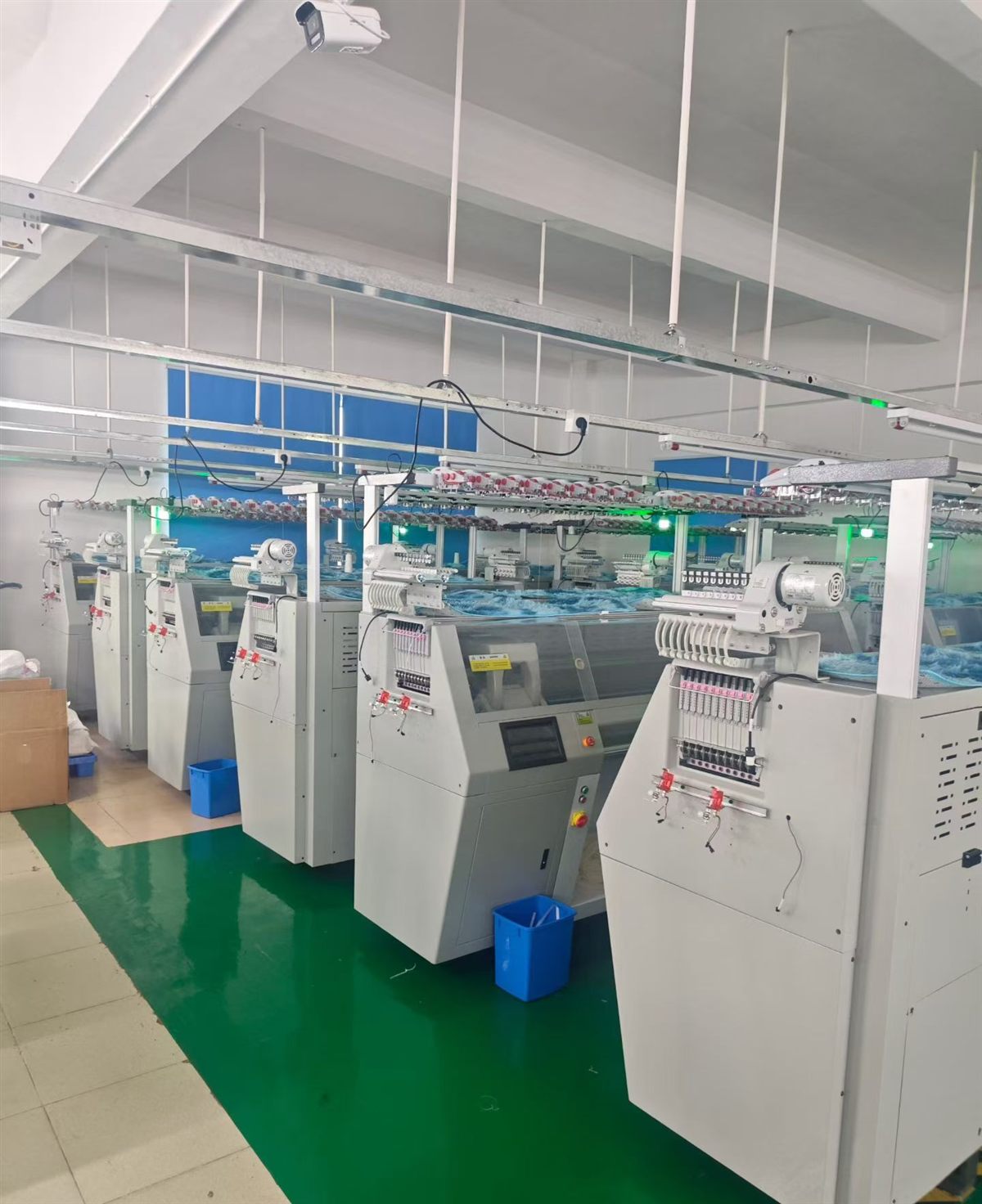
Capacity is the volume of work a factory can complete in a given period, and in knitting it is counted in machine-days: one machine occupied for one working day. Rough capacity is machine count multiplied by available working hours multiplied by the minutes each garment takes on the machine. A factory with more machines is not automatically faster, because the third variable moves the answer.
What reduces effective capacity?
- Complex construction. Cables, jacquard (a pattern knitted from multiple coloured yarns) and intarsia take far more machine minutes per panel than a plain body.
- Small quantity per size and colour. Changeovers between colours and sizes consume machine time without producing sellable units.
- Fine gauges and difficult yarns. Thin yarns knit more slowly and break more often, which cuts daily output.
- Hand work and decoration. Hand-loom panels, embroidery and beading draw on a separate, smaller workforce that cannot be scaled up quickly.
Why does capacity tighten in peak season?
Four pressures stack at the same time of year.
- Delivery dates overlap. Autumn/winter and holiday ranges share one calendar, so many customers are asking for the same weeks.
- Yarn gets scarce. Spinners and dyehouses queue up too, so coloured yarn that was instant in June may take weeks in September.
- Finishing is a shared bottleneck. Washing, pressing, and inspection slots are limited and are used by every order on the floor.
- Skilled hands run short. Linking (the hand operation that joins knitted panels) and hand finishing need trained operators, and good factories are already fully staffed at peak.
What happens when a factory runs out of capacity?
Factories rarely say "no" in one word; they manage the shortfall in ways buyers should recognise.
- Priority goes to established and larger accounts, because a factory protects relationships that carry it through the whole year.
- Quoted lead times stretch — sometimes in stages, as the order moves down the schedule.
- Work is subcontracted to neighbouring workshops. Subcontracting (sending part of an order to another factory) is normal in the industry, but it raises consistency risk on shade, sizing and finishing unless the partner is controlled and inspected.
- Small orders are declined or priced higher, because a short run occupies a machine slot that a larger order could fill.
None of this is malice. It is what a fixed number of machines and hands does when demand exceeds supply, which is why minimum order quantity often softens outside peak and hardens inside it.
How can buyers secure production capacity early?
- Talk about expected styles and volumes before the range is final. A factory can hold tentative machine time against an indicative quantity long before artwork and trims are settled.
- Split the decision in two. Secure the slot first, then confirm colourway and size details. Slot first, details second, is the sequence that works in peak.
- Book ahead of the crowd. The month when every buyer wants to place an order is the worst month to place one.
- Earn scheduling priority through a standing relationship. Suppliers reserve their best dates for customers who order every season, not for a single best-price enquiry.
- Trade time for price, not price for time. Accepting a slightly earlier delivery commitment in exchange for a concession on price is a favourable bargain; demanding a lower price while wanting the tightest delivery window is not.
What bottlenecks sit outside the knitting floor?
Knitting capacity is only one link. Yarn procurement and dyehouse scheduling can add weeks on their own, as our notes on wool yarn price volatility describe. Then come trim and label deliveries, washing and pressing slots, inspection bookings with an agency such as SGS or BV, and finally vessel space. Any one of these can hold a completed knitwear order, so a realistic lead time — the total elapsed time from confirmed order to goods ready for shipment — is measured across all of them, not on the machine alone.
How do you test whether a supplier's capacity claim is credible?
- Ask for machine counts by gauge and category. A supplier that knits everything should be able to state which gauges it runs in-house and which it outsources.
- Ask what else is scheduled in your target window, and how many customers share it.
- Request a production schedule or plan with dates for yarn, knitting, linking, finishing and packing.
- Validate with a test order before placing a season on the line, and check a repeat order's consistency; our supplier vetting checklist sets out the questions in full.
YZR Sweaters is a Dongguan knitwear manufacturer and supplier producing OEM/ODM sweaters, cardigans, polos, dresses and accessories. We will assess your styles against our machine capacity, tell you honestly whether the window is realistic, and reserve early production slots for buyers who plan their season with us. We work with BSCI, SEDEX and Oeko-Tex certified partner factories, welcome factory audits, and support full inspection plus third-party inspection by SGS or BV.
Planning an autumn or holiday programme? Send us your styles, quantities and target ship window — we'll reply with a capacity assessment, booking options and a quote.
Get a free quote Visit yzrsweaters.comFrequently asked questions
How far in advance should a peak-season order be booked?
Earlier than the calendar suggests is comfortable. The right moment is when your styles are known well enough to give an indicative quantity, even if colours and trims are still open, because that is what lets a factory hold machine time. Waiting until the full tech pack is finished usually means placing the order exactly when everyone else does.
Does booking early cost more?
Not usually. Reserving machine time early mainly commits you to a delivery window and an indicative volume, and it often opens space to negotiate on price precisely because the order is easy to schedule. Capacity bought late is the expensive kind, because the factory has to displace something else to fit it in.
Is a subcontracted order a problem?
Not by itself — large factories routinely place overflow with partner workshops during peak. The risk is uncontrolled subcontracting, where the partner's shade matching, measurements and finishing standards are never checked. Ask in advance whether your order may be subcontracted, and require the same inspection standard and third-party inspection access on any subcontracted production.
Comments
Comments are loading. To enable live comments, see setup notes in the repo.