
Knitwear Hand Feel: Micron, Prickle and How to Specify Softness
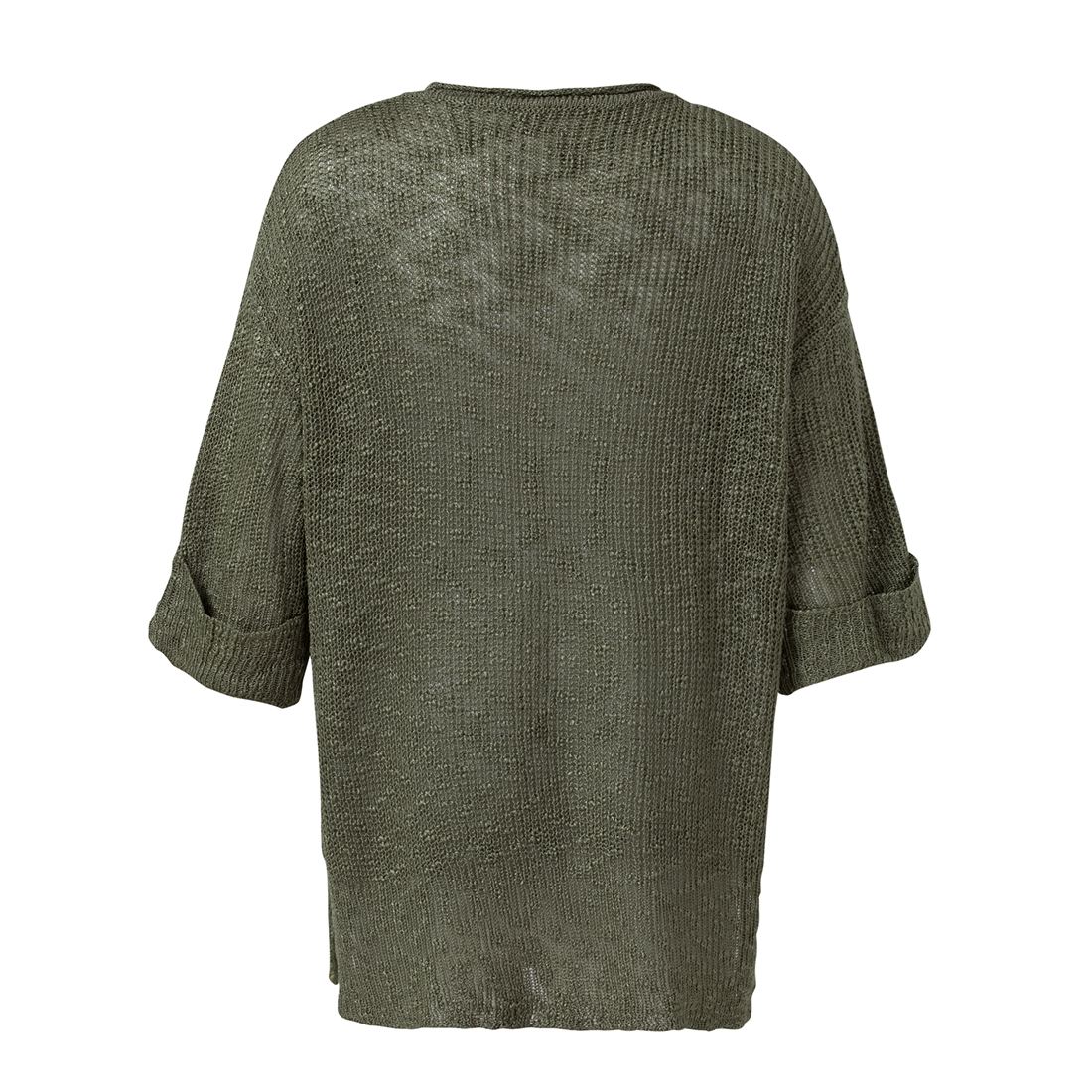 Views: 0
Quick answer
Knitwear hand feel — the softness or prickle you feel against the skin — is decided mainly by fibre diameter in microns, the spread of fibre diameters within the yarn, yarn twist and structure, and the density of the knit. It is not a matter of opinion: micron range, fibre source, yarn type, gauge and a signed reference swatch can be written into an order and checked at inspection.
"Soft" is the most common word in a sweater brief and the least useful. A supplier cannot knit to an adjective, and a buyer cannot reject a shipment because the hand feel is "not quite right". The causes of softness and prickle are well understood, though, so hand feel can be turned into specifications the factory can hit and QC can check.
What does micron actually measure?
A micron (µm) is one thousandth of a millimetre, the unit used to express fibre diameter and therefore wool fineness. Finer fibres bend more easily and press less against the skin, so lower micron generally means softer.
- Under about 20 µm — fine wool and merino, generally comfortable next to skin.
- Around 20-25 µm — reads soft in a loose knit, but can prickle in a tight one.
- Above roughly 25 µm — coarser wool, normal in outerwear worn over layers.
The average is only half the story. Fibre diameter distribution — the share of coarse fibres mixed in — often matters more than the mean: a 21 µm yarn with a small coarse tail can feel smoother than a 20 µm yarn carrying more thick fibres.
Why does a sweater prickle even when it feels soft in the hand?
Prickle is a mechanical sensation, not an allergy. When a fibre end presses against skin it stimulates nerve endings, and fibres above roughly 30 µm are stiff enough to trigger the response. That explains two things buyers find confusing.
- Hand feel and wearing feel are different tests. A fabric can feel dry in the hand and still prickle on the neck.
- The same yarn behaves differently by structure. Prickle depends on how many fibre ends stand proud of the surface — hairiness, density and finishing, not micron alone.
Complaints start at the neck, wrists and waistband, so judge feel on a worn sample, not a folded one.
How does yarn structure change hand feel?
- Worsted spinning — fibres combed parallel — gives a smooth, dense yarn that feels crisp, the basis of most fine-gauge knitwear.
- Woollen spinning leaves fibres jumbled, giving a softer, fuzzier yarn — lofty, with more prickle potential.
- Twist tightens the structure: higher twist gives a firmer, more durable hand, lower twist a softer one.
- Plied yarns (strands twisted together) are smoother than singles and reduce prickle at the same micron.
Fibre choice, spinning and yarn count interlock here — see our sweater yarn guide.
How does the knitted structure affect softness?
Gauge and density set how tightly fibre ends are trapped. A thicker knit at low gauge often feels softer because the surface stays open; the same yarn at high gauge compresses into a denser, crisper fabric. Brushing creates a soft, fluffy face, while compact ribs feel firmer but can be scratchier at the cuff. Read the structural side in our knit gauge explained guide before fixing the yarn.
How can softness be improved without changing the fibre?
- Blend in a finer or smoother fibre — cashmere, fine merino, viscose or silk soften the surface without changing the silhouette.
- Specify a softer yarn — lower twist, plied rather than single, or a finer count — and apply softeners or a controlled wash at finishing, with a hand-check afterwards because some finishes fade with wear.
- Adjust the knit — a looser stitch changes perceived softness more than most buyers expect.
Why is "must be soft" impossible to inspect?
An adjective gives an inspector nothing to accept or reject against, which is how disputes begin. A reference hand sample — an approved swatch or top sample carrying your signature — turns the adjective into a physical standard. From then on "soft" means "not noticeably firmer or coarser than the sealed reference".
How do you write hand feel into an order?
- Fibre and micron band — e.g. "merino, 18.5-19.5 µm average, coarse-fibre share declared".
- Yarn type — worsted or woollen, count, twist and ply.
- Structure — gauge, stitch, target weight and finish.
- Reference sample — a signed hand sample held by both parties.
- Wear test — an internal trial on neck, wrist and waistband before bulk approval.
Micron choice also interacts with price and durability; see our merino versus lambswool comparison.
How is hand feel verified?
Three levels work together. The reference sample gives a tactile benchmark at comparison. A wear trial on skin catches prickle a tabletop check misses. Where risk is high, a third-party laboratory can measure fibre diameter and its distribution on a sample using established methods — defensible evidence if a claim is challenged. Confirm the method with the lab; results describe the yarn, not every wearer.
Which hand-feel beliefs are wrong?
- "Lower micron is always better." Finer fibre costs more and wears faster, so ultra-fine yarns suit delicate knitwear, not hard-wearing basics.
- "Softer means more pilling." Not automatically, but loose, hairy surfaces release fibre more readily; fibre length and twist decide pilling.
- "More cashmere is always softer." Blend behaviour is not linear — at low percentages cashmere adds cost and story more than measurable softness.
YZR Sweaters is a Dongguan knitwear manufacturer producing OEM/ODM sweaters, working with BSCI, SEDEX and Oeko-Tex certified factories. Tell us the hand feel you are targeting and we will propose a fibre, yarn and structure combination, then sample it against a reference swatch. We welcome audits and support third-party inspection by SGS or BV, with flexible MOQ.
Specifying a soft-hand knitwear programme? Send us your target feel, fibre direction and quantity — we'll reply with a yarn and structure proposal plus a quote within one business day.
Get a free quote Visit yzrsweaters.comFrequently asked questions
What wool micron count should I choose for a sweater worn next to skin?
Most next-to-skin wool knitwear sits under roughly 20 µm, and the finer the fibre, the lower the prickle risk. The right number also depends on structure: a loose, brushed knit can tolerate a slightly coarser fibre than a tight fine-gauge one. Ask your supplier for the average and the distribution, then confirm on a worn sample.
Can a sweater be scratchy if it is labelled 100% merino or cashmere?
Yes. Micron and fibre source vary within any fibre name, and coarse fibres blended into a batch will prickle regardless of the label. Yarn structure and fabric density matter too. If it matters to your customer, specify a micron band and a reference sample rather than relying on the fibre name alone.
Is there a lab test that proves a sweater will not itch?
Not directly. Laboratories can measure fibre diameter and the distribution of diameters, which is the strongest technical indicator of prickle potential. Whether a garment itches also depends on fit, finishing and the wearer, so the practical proof is a wear trial alongside the measurement, not a single test result.
Comments
Comments are loading. To enable live comments, see setup notes in the repo.