
What a Sweater Sample Really Costs — and Why
Quick answer
A knitwear sample typically costs between USD 40 and 150 per style, plus courier. The fee pays for a technician's time on the machine, yarn bought at small-quantity prices, and the pattern work — none of which the factory recovers if the order never happens. Most factories, including ours, refund or deduct the sample fee against your first bulk order, which is the honest way to think about it: the fee is a deposit on seriousness, not a product.
"Why is a sample so expensive if the sweater itself is only $6?" is a fair question, and we hear it often from buyers launching their first brand. The short answer is that a sample is not a cheap unit of production — it is a small piece of engineering done by hand on machines that otherwise earn money knitting bulk. Here's where the money actually goes, and how to keep it sensible.
What the sample fee actually pays for
A bulk sweater's price is spread across thousands of identical pieces. A sample has to carry the entire setup on its own:
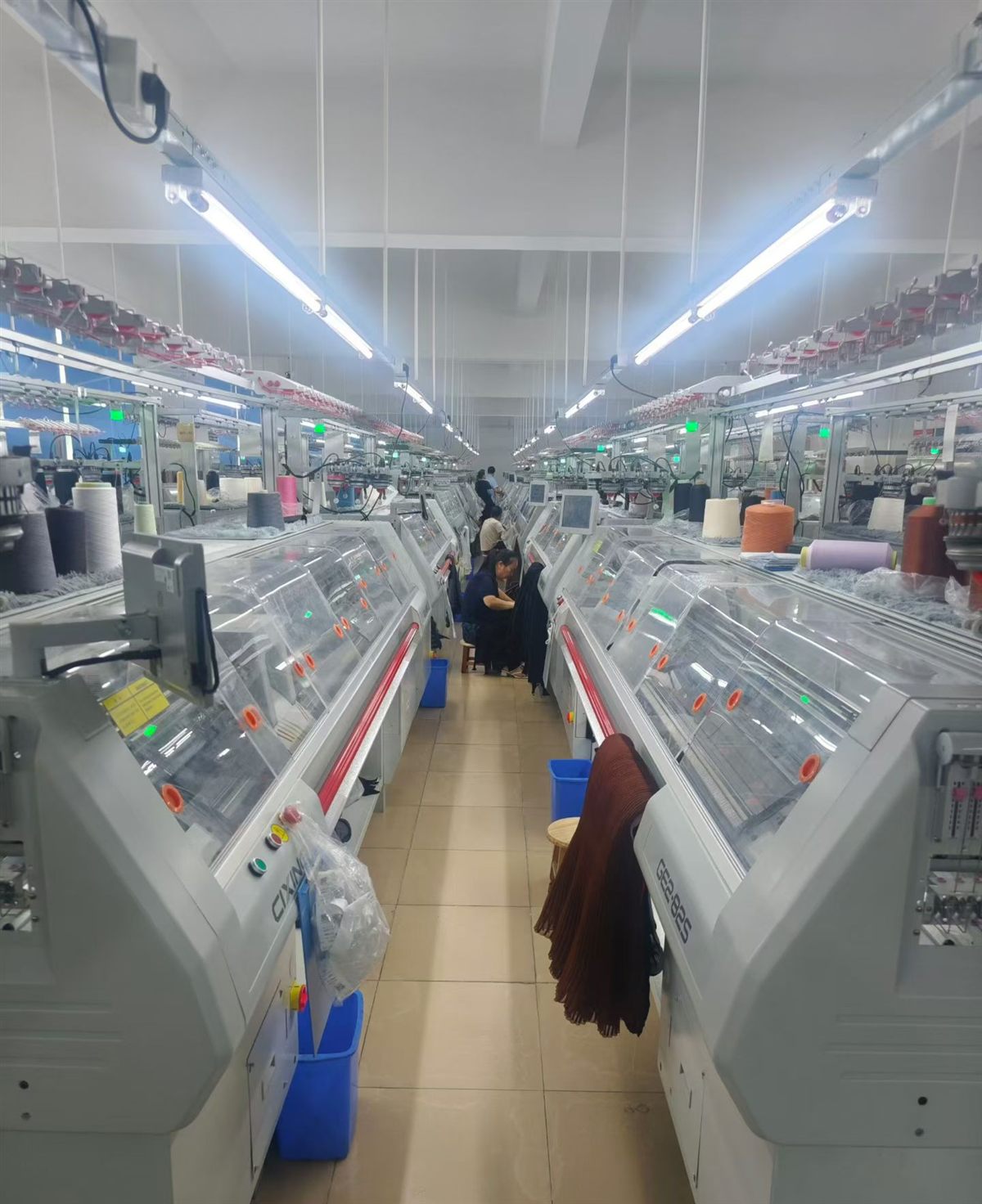
- Pattern and machine programming. Someone has to translate your tech pack or photo into a knitting program, set the gauge, and work out the shaping. On a computerised flat machine that is typically two to four hours of a technician's time before a single stitch is knitted. If you change the neckline afterwards, much of that work happens again.
- Yarn bought at awkward quantities. A bulk order buys yarn by the hundredweight from the spinner. A sample needs two cones, and the factory often has to buy them at retail-ish prices or break a stock cone. If your colour isn't in stock yarn, there may be a small dye lot on top — which is why yarn minimums and colour choice matter so much at sampling stage.
- Machine time at opportunity cost. A knitting machine knitting your one sample is not knitting someone's paid order. In peak season (roughly June to October for winter ranges) that time is genuinely scarce, and sample fees reflect it.
- Finishing. Linking, washing, pressing, label sewing. Same processes as bulk, but set up for one garment.
What is a reasonable number in 2026?
From what we see across our partner factories in Dongguan, honest sampling fees land in these bands:
- Basic jersey or rib styles (crew neck, mock neck, simple cardigan): USD 40–80 per style.
- Structured or patterned styles (cable, jacquard, intarsia, multi-colour stripes): USD 80–150, because programming time roughly doubles.
- Fully fashioned or seamless styles and anything with hand finishing: at the top of the range or above, sometimes USD 150–200.
- Courier to Europe or North America: USD 30–60 depending on weight and speed. This is real money and worth remembering when you compare "free sample" offers that quietly fold it into the price.
If a factory quotes you USD 300 for a plain crew-neck sample with no custom yarn, ask what it includes. Sometimes the answer is "we don't really want this order" — which is useful information too.
When the fee is waived — and the catch
Factories waive or reduce sample fees in three situations. First, for repeat customers with an order history — the relationship is the security. Second, when the buyer commits to a bulk order with a deposit, so the sample is part of production rather than a speculative development. Third, when the style is simple and uses yarn already in stock, so the factory's out-of-pocket cost is genuinely small.
The catch is that "free sample, pay only shipping" offers usually signal one of two things: the factory is very confident you'll order (good), or the sample is being used to hook you and the bulk price will carry the cost (check the quote carefully). Neither is automatically bad — just read it as pricing strategy, not generosity.
How to keep sampling costs down without cutting corners
The buyers who spend the least on sampling aren't the ones who negotiate the fee — they're the ones who don't need a third revision:
- Send a proper brief the first time. A clear tech pack or at least a reference photo with measurements prevents the most expensive mistake of all: a sample made to a misunderstood spec.
- Use stock yarn for the first sample. Approve fit and construction in a stock colour, then approve colour separately via lab dips. A custom-dyed first sample that gets rejected is the single biggest waste of sampling budget we see.
- Batch your revisions. One round of three comments costs the same as three rounds of one. Review the sample against a written checklist so nothing gets forgotten.
- Ask what's refundable. Get in writing whether the sample fee is deducted from the first order. Most factories do this as standard; if yours doesn't, that fee is a real cost of vetting them.
At YZR Sweaters we deduct the full sample fee from your first bulk order, and we tell you upfront whether your colour is a stock yarn or needs a custom dye lot — because that's the difference between a $60 sample and a $160 one. We work with certified partner factories (BSCI, SEDEX, Oeko-Tex) across Dongguan, and sampling is done in-house with the same technicians who will run your bulk, so what you approve is what the production line knows.
Have a style you want priced and sampled? Send us the photo or tech pack with your target quantity, and we'll come back with the sample cost, the bulk estimate and the honest lead time.
Get a free quote Browse our knitwear rangeFrequently asked questions
Is the sample fee deducted from my bulk order?
Usually, yes — and you should ask for it in writing. At YZR Sweaters, the sample fee is fully deducted from your first order of that style. Some factories deduct only part of it, or only above a certain order quantity, so confirm the terms before you pay rather than after.
Why does a custom colour make the sample more expensive?
Because the colour has to exist in yarn before the sample can be knitted. If your Pantone shade isn't a stock yarn, the factory must run a small dye lot, which has a minimum cost regardless of how little yarn is used. Approving construction in stock colour and colour via lab dip keeps this cost out of your first sample.
How many samples should I expect before bulk?
For a well-briefed style, two: a development sample and a pre-production sample. Each additional round usually traces back to an unclear brief or feedback that arrived in fragments. Buyers who consolidate comments and review against a checklist typically stop at two.