
Linen-Blend Knitwear: A Buyer's Guide to Sourcing It Without the Headaches
Quick answer
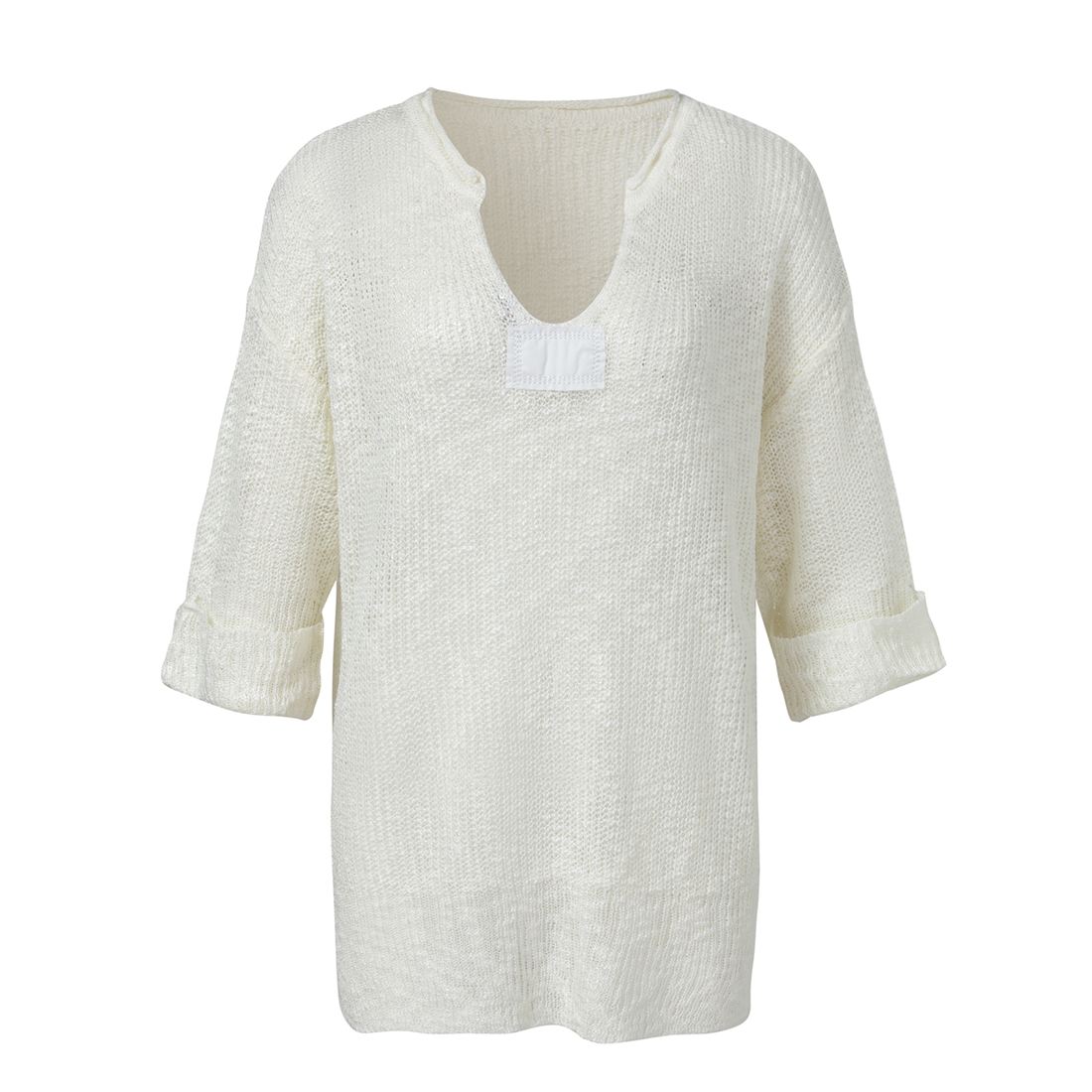
Pure linen rarely knits well — it has no elasticity and breaks on the machine. Commercially viable linen knitwear is almost always a blend: linen/cotton (55/45 or 45/55) for structure, linen/viscose for drape, or linen with a little polyester or nylon for durability. Expect a drier hand, slight slub texture, more shrinkage than cotton, and a higher yarn price. Specify the blend ratio, the yarn count, and a washed sample before you commit to bulk.
Every spring we get a wave of enquiries for "linen sweaters" — and every spring we have the same conversation: what you actually want is a linen blend, and the blend ratio matters more than the word "linen" on the hangtag. Linen brings the cool hand, the dry texture and the premium story, but it behaves badly on knitting machines when it's asked to work alone. Here's what we've learned running linen blends for European and Japanese buyers, so you can brief your factory properly the first time.
Why 100% linen knitwear is rare
Linen fibre is long, stiff and has almost no crimp or stretch. On a flat knitting machine that means frequent yarn breaks, uneven loops and a garment with no recovery — pull it once and it stays pulled. A few specialist mills do knit 100% linen, usually in loose gauges and open structures, but the yield is poor and the price reflects it. If a supplier offers you cheap 100% linen knitwear, check the fibre content test report before you believe the label.
The blends that actually work, and what each is for:
- Linen/cotton (45–55% linen). The workhorse. Cotton supplies the elasticity and loop stability; linen supplies the cool hand and the slubby character. This is what most "linen sweaters" in retail actually are. If you're already buying cotton knitwear, this is the smallest step up.
- Linen/viscose or linen/Tencel. More drape, softer hand, better for women's fine-gauge tops and dresses. Less structure, so avoid it for collars and cuffs that need to hold shape.
- Linen with 5–15% nylon or polyester. Adds abrasion resistance and reduces breakage in knitting and in wear. Common for polos and anything that will see hard use — but say goodbye to a "natural fibre only" marketing claim.
- Linen/wool. A niche transitional-season blend — the wool gives recovery, the linen keeps it breathable. Interesting for early-autumn capsules.
What linen does differently in production
If your factory is experienced with cotton and wool, linen blends still change a few things on the floor:
- Gauge and structure. Linen blends knit best at 7gg–12gg in jersey, rib and simple textures. Fine cables and tight jacquards stress the yarn and raise the break rate. We usually steer buyers toward open stitches and stripes for a reason — it's not just aesthetics.
- Shrinkage and relaxation. Linen/cotton typically shrinks 4–6% in the first wash, more than pure cotton. Your spec should ask for measurements after wash, and your grading should be validated on a washed sample, not a fresh one. Related: ask for a sample wash test before approving bulk.
- Creasing. Linen creases, full stop. Garment washing softens this, and tumble-dried "vintage wash" finishes turn the creasing into a feature. Decide whether you're selling crisp or lived-in before the finishing stage, because the two are different processes.
- Colour. Linen takes dye differently from cotton, so in a blended yarn you can get a subtle two-tone ("chambray") effect — charming or a defect, depending on what you ordered. Approve a lab dip on the actual blend, not on a cotton reference.
Cost, MOQ and timing
Linen-blend yarn costs roughly 30–60% more than equivalent cotton yarn, and European flax (the premium story buyers want) costs more again than Chinese or Egyptian flax. Yarn minimums run higher than cotton because fewer spinners carry linen blends in stock colours — expect custom colour minimums around 300–500 pieces per colour unless you pick from the spinner's stock card. Lead time for custom-dyed linen blend yarn can add three to four weeks, so for spring delivery you want yarn booked by early autumn at the latest — the same calendar logic as any spring–summer knitwear programme.
One more honest point: linen blends pill less than cotton but show pulled threads more, and customers sometimes read the natural slubs as defects. A line on the care card ("the texture is characteristic of natural linen") saves you returns.
At YZR Sweaters we run linen/cotton and linen/viscose blends every spring for buyers in France, Japan and the US, and we keep stock-service linen-blend yarn cards from our regular spinners so you can often skip the custom dye lot entirely. Our partner factories in Dongguan (BSCI, SEDEX, Oeko-Tex certified) knit these yarns at 7gg–12gg with garment-wash finishing, and we'll always send you a washed sample — because unwashed linen measurements don't mean much.
Planning a linen-blend capsule for spring? Send us your styles and target price, and we'll tell you which blend and gauge gets you there — plus what's available in stock yarn colours this season.
Get a free quote Browse our knitwear rangeFrequently asked questions
Is linen knitwear suitable for summer?
Yes — it's one of the few knit constructions that genuinely works in heat, because linen is highly breathable and moisture-wicking. The caveat is weight: keep fabric weight in the 180–260 gsm range and use open or fine-gauge structures. A heavy-gauge linen sweater is nobody's friend in July.
How do I stop linen knitwear from shrinking?
You don't stop it entirely — you engineer around it. Specify garment-washed finishing so the shrinkage happens at the factory, not in your customer's first wash. Then set your measurement tolerances on the washed garment and make sure the size label reflects the post-wash fit. We treat a washed-sample approval as mandatory for linen blends.
Can I market a 55% linen blend as a "linen sweater"?
The fibre content label must state the true percentages (55% linen, 45% cotton, for example) in most markets, including under US FTC and EU rules. Marketing language has more latitude — "linen-blend sweater" is standard and safe; calling it simply "linen" when it's under half linen invites complaints and, in some jurisdictions, regulatory trouble.