
Women's Sweater Styles: A Sourcing Guide for Buyers
 Views: 0
Women's knitwear moves faster than almost any other part of a sweater range. Silhouettes turn over every season, colour counts run higher than in menswear, and one style can be reordered in three colourways or be finished after a single season. The hard part is not finding styles — it is choosing the ones that match your consumer, your price band and your factory's strengths.
The core women's silhouettes
Most women's sweater programs are built from a small set of shapes, then refreshed with colour, stitch and trim. Knowing which shape you are buying makes the brief to your supplier much clearer.
- Crew and V-neck pullovers — the volume base of the range; simple, repeatable, easy to reorder.
- Cardigans — button-through, open-front or belted. Cropped cardigans trend young; longline dusters suit a more premium customer.
- Turtleneck and funnel neck — the autumn/winter anchor, usually in a heavier gauge.
- Cropped and boxy fits — short body, dropped shoulder, often paired with high-waisted bottoms.
- Longline and tunic lengths — worn over leggings or dresses; a layering piece with a higher ticket price.
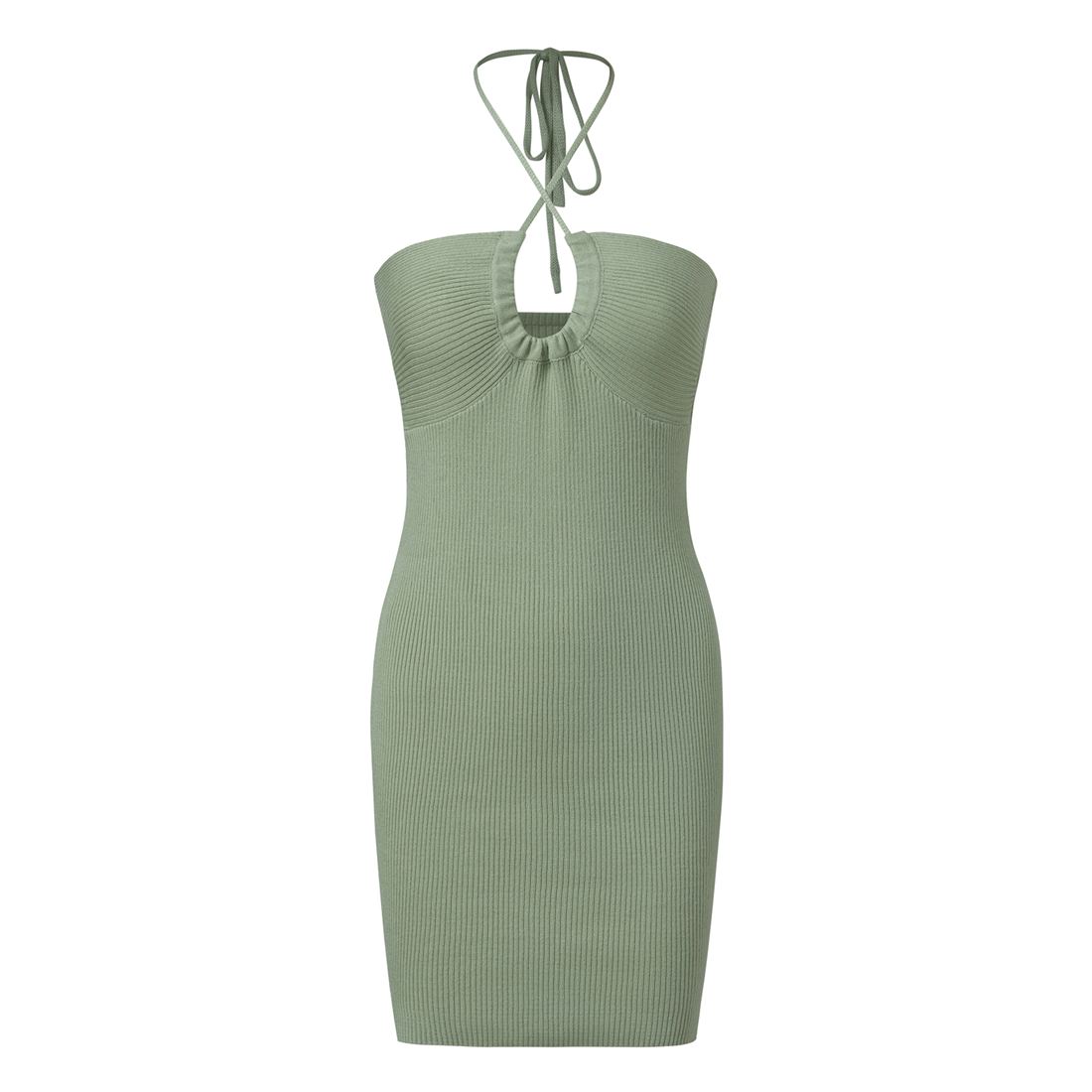
- Cut-out, cold-shoulder and off-shoulder knits — spring/summer and party capsules rather than core winter.
- Halter, collared and knitted polo shapes — resort, holiday and warm-weather lines.
- Ribbed versus flat knit — rib reads modern and recovers well; flat knit and jacquard carry pattern and logo work.
Stitch direction matters as much as shape. A vertical ribbed panel flatters differently from a horizontal or diagonal one, and a fully fashioned armhole usually lifts perceived quality in a fitted style. If the look depends on the stitch, say so in the brief rather than leaving the mill to interpret it from a flat sketch.
How womenswear differs from menswear
- Fit and waist shaping — more curved body panels, narrower shoulders and a defined waist on fitted styles.
- Length — shorter bodies and sleeves relative to menswear; cropped fits are common.
- Colour count — women's ranges generally run more colourways per style and more lab dips to approve.
- Hand feel — softness at the neckline is a dealbreaker; prickly yarns do not survive returns.
- Details — pointelle, scalloped edges, ribbon ties, pearl buttons and openwork are expected in this category.
Yarn and hand feel
Women's knitwear is usually bought on touch first and price second. Viscose and cotton blends give a cool, drapey hand for spring; merino and lambswool blends move into autumn; cashmere and cashmere-blend yarns support the top of the range. Acrylic still has a place in high-volume, price-led programs, but the yarn has to be chosen for softness rather than only for cost — a slightly better blend often sells through at a much better rate than a harsh one.
Ask for the hand feel in writing: gauge, yarn count and a reference garment or swatch. Two knits can share a weight and feel completely different, so a physical swatch settles more questions than a spec sheet does.
Sizing and grading
Women's size ranges vary widely by market, and a style that is graded too aggressively at the bust or hip will come back as a return. Confirm your size chart against a fit sample in at least three sizes — base, middle and largest — rather than trusting the base size alone. Where a style is close-fitting, plan the grade rule with the factory early; stretch and recovery in the yarn will affect how the garment measures after washing.
Know who you are buying for
- Women's fashion brands — fewer styles, deeper development, stricter fit and trim standards.
- Fast fashion and trend accounts — speed and colour range over construction detail; short runs per colourway.
- E-commerce and marketplace sellers — size-chart accuracy is critical, plus consistent reorders of proven styles.
- Boutiques and independent labels — small batches, distinctive stitch and yarn, higher price tolerance.
Ordering notes for women's knits
- Book the development slot early — women's colour counts mean more lab dips and more sample rounds.
- Decide the colourways before bulk yarn is dyed; late colour additions are the most common cause of delay.
- Confirm trim, button and label positions on the pre-production sample, not on the bulk.
- Plan a small first run of the riskier trend styles, and keep the proven shapes on a repeating cycle.
Working with a knitwear supplier
Our OEM/ODM service covers women's pullovers, cardigans, dresses and knit accessories, with custom colours, private label trims and packaging. MOQ is flexible enough to test a colourway before scaling, sampling is straightforward, and our partner factories are certified (BSCI / SEDEX / Oeko-Tex) and welcome audits and third-party inspection by SGS or BV.
Building a women's knitwear range? Send us your style references, colours and target quantity — we'll reply with a quote and sampling plan within one business day.
Get a free quote Visit yzrsweaters.com
Comments
Comments are loading. To enable live comments, see setup notes in the repo.