
Fit Sessions and Pattern Blocks: Getting Knitwear Fit Right
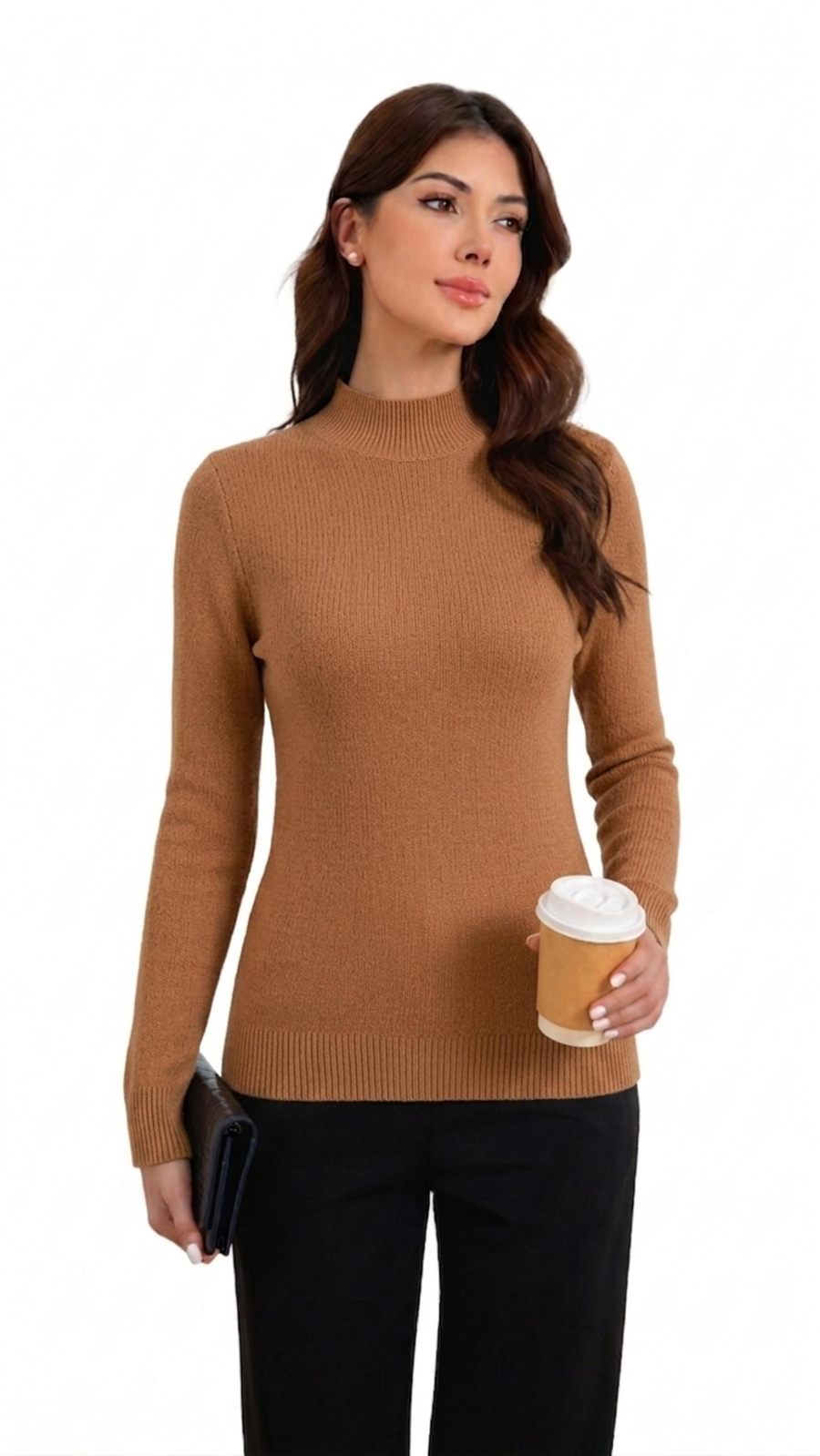
Quick answer
A pattern block is the base shape a style is drafted from — the reusable fit foundation, with shoulder position, armhole depth and body proportions already settled. A fit session is where the sample made from that block is tried on a human being and assessed for how it actually sits and moves. Knitwear needs both because knitted fabric behaves differently on a body than flat, and because a block that works in one gauge will not automatically work in another.
Buyers often treat fit as something the factory gets right or wrong, and it is more useful to treat it as something the two sides agree on in a session. The questions a fit session answers — does the shoulder land where it should, is the armhole deep enough, does the cuff clear the hand — cannot be settled on a flat sample, because knitted fabric moves on a body in ways that measurements do not capture.
What is a pattern block in knitwear?
A block is the base pattern a style is developed from: a set of proportions already settled for a given fit, gauge and customer. Rather than drafting every new style from nothing, a brand or factory develops a block once and then builds styles from it, changing neckline, length, sleeve or detail while leaving the underlying fit foundation alone.
This is why an experienced supplier will ask about your existing block early. If you already have a fit that sells, developing from your block preserves it. If you do not, the first style in a new programme effectively creates one, and that first sample deserves more scrutiny than the rest — everything after it inherits its fit.
Blocks are gauge-specific in a way that is easy to forget. A block drafted for a 12-gauge sweater and applied to a 5-gauge chunky will not behave the same, because fabric thickness changes how the garment sits at the shoulder and armhole. Our notes on knit gauge explain how gauge changes fabric character. A style moved to a different gauge should be treated as a new development, and our notes on changing sweater gauge set out what that involves.
What happens in a fit session?
A fit session is a structured try-on rather than an informal look. Someone of the target size — a fit model, a staff member, or in a small brand's case the founder — wears the sample, and the people assessing it work through the garment systematically rather than reacting to an overall impression.
- Balance. Does the garment hang level? Shoulder seams should sit at the shoulder point, front and back hems should be level, and side seams should hang straight. A sweater that pulls to one side has a balance problem, not a manufacturing defect.
- Ease and movement. Is there enough room to move the arms without the body riding up? Try reaching forward, raising the arms and sitting down. Knitted fabric has natural stretch, which can mask a tight armhole in a static pose.
- The specific points. Neckline depth and shape, body length against the intended wearer, sleeve length against the wrist bone, and how the cuff sits.
- Comfort and hand feel on the body. Prickliness at the neck and under the arms will not show on a flat sample — it needs to be worn for a few minutes, which our notes on hand feel and micron cover.
Photographs at each stage, front and back and in movement, are what make the session useful later. A comment like "shoulder slightly forward" means nothing a month later without an image beside it.
How does knitwear fit differ from woven fit?
Knitted garments behave differently enough that fit assessment needs a different expectation. A woven shirt holds its shape because the fabric is stable; a knitted sweater is a mesh of loops that stretches, recovers and moves with the body. Two consequences matter most.
Ease is harder to judge statically. A knit that feels correct standing still can ride up the moment the wearer reaches forward, which is why a fit session includes movement rather than a static pose.
Relaxation changes the reference. Because knitted fabric settles after knitting and finishing, a fit approval is made against a garment that has already relaxed. Approving on a garment that will still change its dimensions is a common source of disagreement later.
What should be recorded and agreed?
The output of a fit session is a written, dated set of decisions — not a general impression. For each point that needs changing, record what the sample measures, what it should measure, and which dimension moves to get there. This is what prevents a second sample that overcorrects.
Three categories of change should be separated, because they have different consequences.
Measurement changes — chest, length, sleeve — are straightforward adjustments to the block or the grade, and our notes on measuring a sweater explain how the figures are taken so both sides are working from the same numbers.
Pattern changes — armhole depth, shoulder slope, neckline shape — alter the block itself, and they should be recorded as a block revision rather than a style change, because every future style built from that block will inherit them.
Fabric changes — a different yarn or gauge — invalidate the fit assessment entirely. A sweater re-knitted in a heavier yarn needs a fresh session, because the fabric thickness changes how the garment sits.
Once the changes are agreed, the corrected sample becomes the fit reference. Its measurements, and ideally a photograph, are recorded against the style so that the bulk can be measured against it — which is how a fit decision survives the months between sampling and delivery.
How should a buyer run this practically?
- Send your block or your best-selling reference garment at the brief stage. This is the single most effective step. A factory that can measure a garment you already sell will match it far more closely than one working from adjectives.
- Decide who wears the sample, and make it consistent. A fit model or the same staff member, at a size that matches your core customer. Changing the person between rounds changes the assessment.
- Use a structured checklist rather than a conversation. Work through balance, ease, points and comfort in order, so nothing gets skipped because attention went to the most visible issue.
- Photograph the sample on the body, not on a hanger, front and back, at the start and after any adjustment.
- Approve in writing with the measurements attached. A fit approval that exists only in an email thread cannot be checked later, and our notes on reviewing a sample set out where fit sits in the wider approval.
- Do not approve a fit on a gauge you are not going to produce. If the bulk will run in a different yarn or gauge, approve the fit on that — the sample cost is trivial against a fit problem discovered at delivery.
At YZR Sweaters we work with partner factories holding BSCI, SEDEX and Oeko-Tex certifications, welcome factory audits, and support third-party inspection through firms such as SGS and BV. On fit we work from your block or your reference garment where you have one, record the agreed measurements against the approved sample, and photograph the fit on a body — because fit is the one specification that cannot be verified on a flat sample.
Developing a knitwear style and want the fit settled before bulk? Send us your reference garment or block, and the fit you are aiming for, and we will come back with a proposal.
Get a free quote Visit yzrsweaters.comFrequently asked questions
Do I need a fit model for knitwear development?
Not necessarily, but you need consistency. A professional fit model gives repeatable results, which matters if you develop several styles. A small brand can use a staff member whose measurements match the target customer, provided the same person wears each round — changing the wearer between samples makes it impossible to tell whether the garment changed or the assessment did.
Can I approve fit from measurements alone?
No. Measurements confirm that a garment matches a chart, but they do not tell you whether it hangs level, whether the armhole allows movement or whether the neckline feels comfortable against the skin. Knitted fabric behaves differently on a body than flat, so a fit approval needs the garment worn, even briefly.
Why did the fit change when we kept the same pattern?
Almost always because the yarn or gauge changed. Fabric thickness alters how a garment sits at the shoulder and armhole, so the same pattern in a different gauge produces a different fit. Tension drift within an unchanged specification can move the dimensions too — our notes on knitting tension and loop length cover the mechanism.