
Selling Knitwear in the Middle East: What Actually Changes
Quick answer
Sourcing for Gulf and Middle East customers is not a matter of shipping the European range there. Three things change: weight — much of the demand is lightweight or open-gauge, sold as air-conditioning layering rather than winter warmth; coverage — longer lengths, longer sleeves and higher necklines matter commercially; and timing — Ramadan and the Eid gifting peaks move through the calendar each year. Arabic labelling and country-specific conformity programmes also need checking before the goods ship.
The mistake we see most often is treating the Middle East as a warm version of Europe. It isn't. A Gulf customer's coldest experience of the year is often indoors, which changes what the knitwear is for, while dress norms change what it can look like. Get those two right and the market rewards a supplier rather well, because it buys for quality and is not primarily price-led at the premium end.
The climate is not the point — the air conditioning is
Yes, it is hot outside. The more useful observation is how aggressively interiors are cooled. Offices, restaurants, hotels and malls commonly run cold enough that customers want something over their shoulders for eight months of the year.
That produces a demand pattern that surprises buyers used to European knitting:
- Fine-gauge, lightweight layers rather than heavy winter knits — think open cardigans, shrugs, light wraps and fine-gauge pullovers that fold into a bag.
- Breathable fibres. Cotton, viscose, lyocell and blends carry the category; heavy wool plays only in a small winter window. Our notes on cotton knitwear and lyocell and hemp fibres cover the yarn choices.
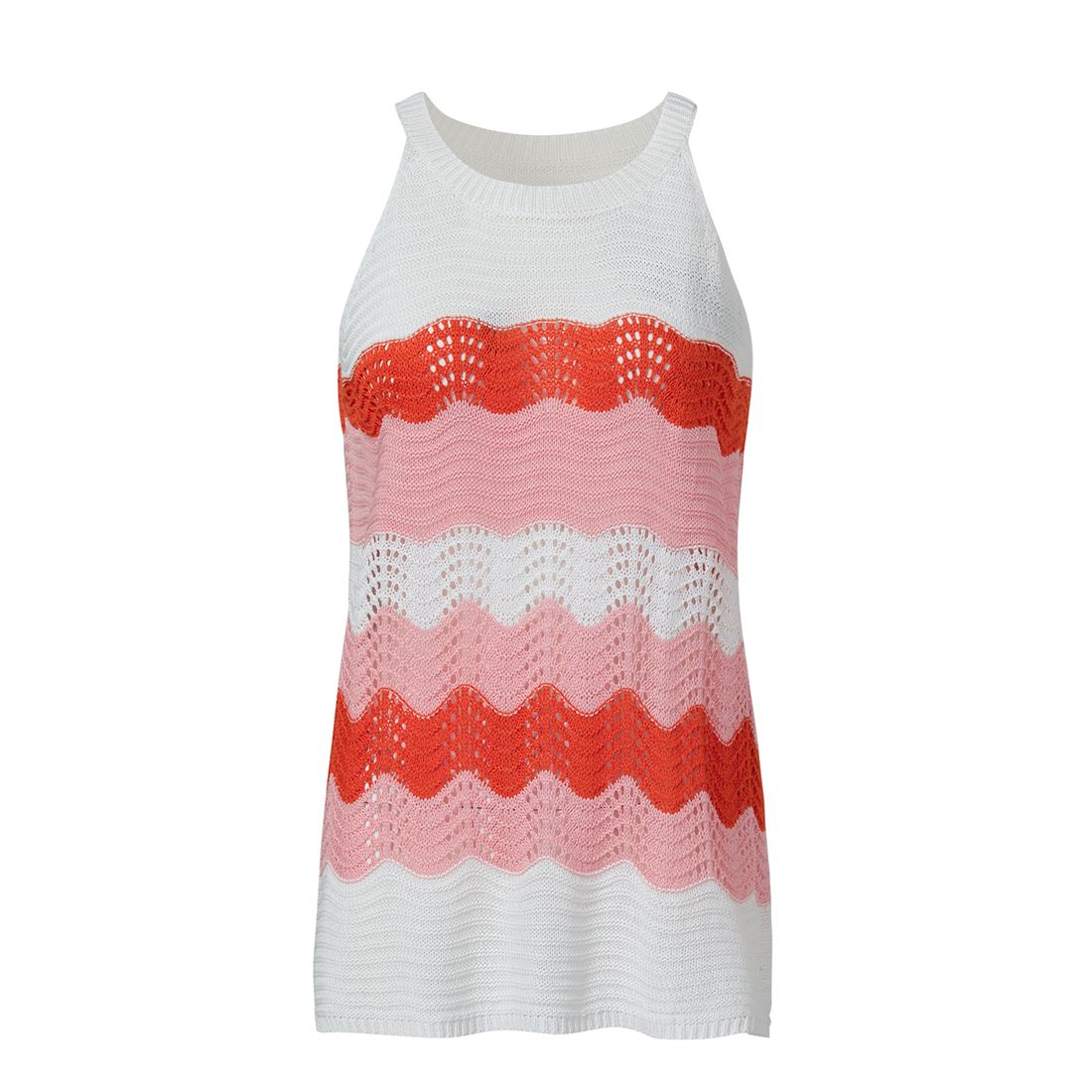
- Opacity and coverage against sunlight as well as against the cold — an open-gauge knit is often worn over rather than under.
- A genuine but narrow winter in the northern Levant and Turkey, where real cold exists and heavier gauges have a place.
The sourcing consequence is that a lot of this sits much closer to a spring/summer programme than to an autumn/winter one, even though it sells across the year.
Coverage is a specification, not a preference
In most Gulf markets, a large part of the customer base dresses modestly, and that has direct consequences for the pattern rather than just the styling:
- Longer sleeve lengths — often longer than a European equivalent on the same size.
- Longer body lengths and longer hemlines, because knitted tops are layered over trousers and skirts rather than tucked.
- Higher necklines and lower armholes are worth offering as a variant; a standard Western scoop reads very differently.
- Less body-con. Relaxed and straight silhouettes outsell close fits in modest categories, which is good news for knitters — there is more fabric per piece.
- Opacity. Fine-gauge openwork that reads sheer under store lighting moves slowly. Our notes on silhouettes and fits cover how to state these on a spec.
Knitted dresses and longline tunics are a strong category here for exactly these reasons, and our guide to knitted dresses covers the construction choices that keep them hanging properly.
Sizing runs generous
Gulf size expectations generally sit on the generous side, and the fit block should be built for the market rather than converted. Two practical notes: the sizes above XL are a meaningful part of demand rather than an afterthought, and the shoulder and upper-arm fit matters more than usual because a knit often goes over another layer. Our notes on plus-size knitwear apply directly, and building a market-specific block is usually cheaper than grading up from a base you do not really want to use.
Ramadan and Eid move through the calendar
This is the single biggest operational difference from Western programmes. The Islamic calendar is lunar, so Ramadan and the Eid periods fall roughly eleven days earlier each year, drifting through all four seasons over the cycle. Retail peaks follow them.
What that means in practice:
- Plan backwards from the dates each year rather than assuming a fixed month. A buying calendar built for European seasons needs translating, not copying.
- Gifting is a real category. Eid drives demand for presentable, well-packaged pieces, which raises the value of packaging and garment presentation beyond what the same item would carry in Europe.
- Delivery windows are unforgiving. Missing Eid is closer to missing Christmas than missing a season.
- Shipping slows around religious holidays and national days, as does customs clearance.
Labelling and conformity — check before you ship
Requirements differ by country and they change, so treat the following as a checklist to verify with your importer, not as a fixed rule:
- Arabic labelling. Several Gulf markets expect Arabic text on textile labels and packaging, often alongside English. Confirm which elements must be translated — care labelling rules are covered in our notes on care labels.
- Conformity programmes. Saudi Arabia operates a product conformity system for regulated goods, and the UAE administers its own conformity schemes. Book this early; it is paperwork with its own timetable, run separately from your purchase order.
- Sizing and fibre declarations still need to be accurate and to match what is physically on the garment.
- Restricted substances. Buyers increasingly apply the same RSL as their European customers — our notes on restricted substances testing cover how that is documented.
Our notes on labels and hangtags cover who produces what; the important point is to raise it during development, because a missing Arabic label discovered at customs is a problem nobody enjoys.
Logistics and commercial structure
The Gulf is as much a distribution hub as a destination. A large share of what arrives is re-exported onward, which changes how you should think about packing:
- Air freight is common for fashion goods even when the volumes look express-sized — the comparison in our notes on air versus sea freight applies, but the decision often lands differently here.
- Heat in transit. High container temperatures through summer make pack integrity, odour and moisture more than theoretical concerns; the same conditions drive mould problems.
- Sealed, individually packed garments survive onward distribution and repeated handling much better.
- Agent and distributor relationships are central to how business is done, and they are built over visits rather than emails. Our notes on trade shows are relevant because this is a market where meeting matters.
Where buyers go wrong
Three patterns account for most disappointment. Sending a heavy winter range because "it's knitwear". Assuming the size block works because it works in Europe. And discovering the labelling or conformity requirement after production rather than before it. All three are avoidable with a conversation early in development.
At YZR Sweaters we work with partner factories holding BSCI, SEDEX and Oeko-Tex certifications, welcome factory audits, and support third-party inspection through firms such as SGS and BV. We have shipped lightweight gauge fine-gauge programmes into hot climates for years — our advice generally starts with asking what the customer wears indoors, because that is what actually sells.
Building a Gulf or Middle East knitwear programme? Send us your target weights, coverage requirements and Eid deadlines and we will quote the yarn options and a realistic delivery plan.
Get a free quote Visit yzrsweaters.comOr reach us directly: daniel@yzrsweaters.com · WhatsApp +86 137 2449 4230 · Dongguan, China
Frequently asked questions
Does anyone buy heavy knitwear in the Gulf?
Very little, and mainly for travel. Local demand skews fine-gauge and lightweight, worn indoors against air conditioning. The exception is the northern and Levantine parts of the wider region, where a real winter exists and mid-weight knits are sold. If you are unsure, start one style down in weight from what you would send to Europe.
Do I need Arabic on every label?
It depends on the destination country and the label type, and it changes — so verify with your importer rather than relying on a rule of thumb. In practice most buyers shipping into the Gulf find that Arabic text on the fibre/care label or the retail packaging is expected, and it is far cheaper to produce in development than to add with stickers at the port.
How far ahead of Eid should production start?
Further than the equivalent European season, because the dates move and the shipping and clearance windows compress around the holiday. Build the programme backwards from the confirmed dates for the year in question, allow for any conformity paperwork, and treat missing the Eid window as a lost season rather than a late delivery.
Is the market only interested in price?
Not at the levels most of our customers sell into. The premium end of Gulf retail rewards fabric, finish and presentation, and customers notice construction quality — which is why linking quality and clean finishing matter more here than they do in a volume basics programme.